How Long Does It Take To Diagnose Lung Cancer?
Understand how long it takes to diagnose lung cancer and the steps involved. Learn key symptoms and how to expedite your diagnosis for better outcomes.
Learn how lung cancer is diagnosed and staged, including imaging tests, biopsies, pathology, molecular testing, and the TNM staging system used to guide treatment decisions.

Understand how long it takes to diagnose lung cancer and the steps involved. Learn key symptoms and how to expedite your diagnosis for better outcomes.

Discover essential lung cancer tests that reveal if the disease has spread. Learn about key imaging, blood, and biopsy options to empower your treatment decisions.
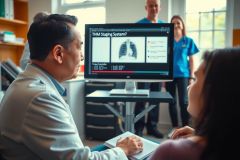
Discover the TNM staging system for lung cancer and how it impacts treatment choices and prognosis. Empower yourself with vital knowledge for better care.
Get a free consultation and talk through symptoms, treatment options, and possible care paths with our coordination team.
Get Free Consultation
Discover how lung cancer misdiagnosis can occur and learn to recognize early signs that lead to accurate diagnosis and timely treatment. Advocate for your health today.

Discover how lymph nodes impact lung cancer staging and treatment decisions. Learn the key roles they play in prognosis and empower your healthcare choices.
Discover how PET scans enhance lung cancer diagnosis by detecting tumors and assessing treatment response. Understand their vital role for better outcomes.

Understand lung biopsy procedures and their importance in lung cancer diagnosis. Discover types, symptoms, and recovery tips to empower your health decisions.
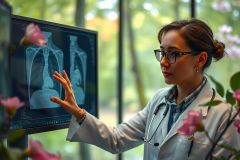
Discover essential imaging tests for lung cancer diagnosis. Learn how CT, MRI, and PET scans enhance early detection and improve treatment outcomes.
Lung Cancer Diagnosis & Staging
Lung cancer diagnosis involves confirming the presence of cancer, identifying its type, and determining how far it has spread. Accurate diagnosis and staging are essential for selecting the most appropriate treatment and understanding the available options. The process may include imaging, tissue sampling, laboratory analysis, and specialized tests that provide information about the tumor’s biological characteristics.
How Is Lung Cancer Diagnosed?
The diagnostic process often begins when a person develops symptoms or an abnormality is detected during a screening or imaging examination. A healthcare professional reviews the patient’s medical history, smoking and exposure history, symptoms, and physical examination findings.
Imaging tests may include a chest X-ray, computed tomography (CT), or other scans to evaluate suspicious areas in the lungs. Imaging can identify abnormalities, but a tissue or cell sample is usually needed to confirm a lung cancer diagnosis.
Biopsy and Pathology Testing
A biopsy involves collecting cells or tissue from a suspicious area so they can be examined by a pathologist. Depending on the location of the tumor, sampling may be performed through bronchoscopy, endobronchial ultrasound-guided procedures, CT-guided needle biopsy, or surgery. Fluid samples may also be examined when clinically appropriate.
Pathology testing determines whether cancer is present and identifies the type of lung cancer. The main categories are non-small cell lung cancer (NSCLC) and small cell lung cancer (SCLC). Non-small cell lung cancer includes subtypes such as adenocarcinoma and squamous cell carcinoma. Distinguishing between these types is important because their treatment approaches differ.
Molecular Testing and Biomarkers
For many patients with non-small cell lung cancer, molecular testing provides information that can help guide treatment. Tumor tissue, and in some circumstances a blood-based liquid biopsy, may be tested for specific genetic alterations or biomarkers.
Examples include EGFR mutations, ALK rearrangements, ROS1 rearrangements, and other actionable alterations. PD-L1 testing may also help inform immunotherapy decisions. The tests recommended depend on the cancer subtype, stage, available tissue, and current treatment guidelines.
Molecular testing does not replace pathology or staging. Instead, it adds information that may help the oncology team identify targeted therapies or other suitable treatment strategies.
How Is Lung Cancer Staged?
Staging describes the extent of cancer in the body. It helps clinicians estimate prognosis, plan treatment, and communicate findings consistently.
Non-small cell lung cancer is commonly staged using the TNM system. The T category describes the size and extent of the primary tumor, N describes whether cancer has spread to nearby lymph nodes, and M indicates whether distant metastases are present. These findings are combined into stage groups, generally ranging from stage I to stage IV.
Small cell lung cancer is often described as limited-stage or extensive-stage disease, although TNM staging may also be used. Limited-stage disease is generally confined to an area that can be treated within a tolerable radiation field, while extensive-stage disease has spread more widely.
Tests Used to Determine the Stage
Staging may involve CT scans, PET-CT, brain MRI, and procedures to assess lymph nodes or other suspicious areas. The exact tests depend on the cancer type, symptoms, and clinical findings.
If imaging suggests that cancer has spread to another organ, additional testing or biopsy may be needed to confirm the finding when it would affect treatment decisions. The oncology team combines imaging, pathology, and other results to establish the most accurate stage possible.
Why Accurate Staging Matters
The stage of lung cancer is one of the main factors used to determine treatment options. Early-stage disease may be treated with surgery or radiotherapy, while locally advanced or metastatic disease may require combinations of systemic therapy, radiotherapy, and other approaches. Molecular characteristics and the patient’s overall health also influence treatment selection.
Staging may be updated if new information becomes available or if the cancer progresses. Patients should discuss their diagnosis, stage, biomarker results, and treatment options with a multidisciplinary oncology team to understand what the findings mean for their individual situation.