Dental Crowns and Bridges

Learn how crowns restore damaged teeth and bridges replace one or more missing teeth.

Overview

View All
Overview

Risks and Complications

View All
Risks and Complications

Need guidance beyond these articles?

Connect with our coordination team to understand your options and choose a suitable next step for your condition.

Get Free Consultation
Private request • Coordination support

Cost

View All
Cost

Dental Crowns and Bridges

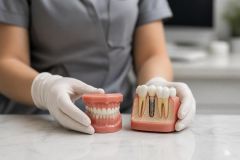
Dental crowns and bridges are fixed dental restorations used to repair damaged teeth and replace missing teeth. A crown covers and protects an individual tooth or dental implant, while a bridge fills the space created by one or more missing teeth.

A dental crown may be recommended when a tooth has extensive decay, a large filling, a fracture, severe wear, discoloration, structural weakness, or previous root canal treatment. Crowns may also be used as part of implant treatment or cosmetic smile rehabilitation.

Dental bridges consist of one or more artificial teeth supported by natural teeth, implants, or a combination of both. Traditional bridges usually require the teeth on each side of the gap to be prepared for crowns. Implant-supported bridges may replace multiple teeth without reducing healthy neighboring teeth.

Common crown and bridge materials include porcelain, zirconia, lithium disilicate, metal alloys, porcelain fused to metal, resin, and hybrid ceramics. The most appropriate material depends on the location of the restoration, available tooth structure, bite pressure, aesthetic requirements, gum position, and budget.

Treatment typically begins with a clinical examination and X-rays. The dentist evaluates the tooth roots, surrounding bone, gums, bite, and condition of adjacent teeth. Existing decay or infection must be treated before the final restoration is placed. Some teeth may require root canal treatment, core buildup, post placement, or gum treatment.

During crown preparation, the tooth is reshaped to create space for the restoration. A digital scan or impression is taken, and a temporary crown may be placed. The final restoration is then produced in a dental laboratory or through chairside milling technology. At the fitting appointment, the dentist evaluates the margins, contact points, shape, color, and bite before cementing or bonding the crown.

Crowns and bridges can improve chewing function, appearance, speech, and tooth stability. They may also help prevent nearby teeth from moving into an empty space. However, the underlying teeth and gums still require daily care.

Possible complications include tooth sensitivity, decay at the crown margin, gum inflammation, loosening, ceramic chipping, crown fracture, bite discomfort, root canal problems, and damage to supporting teeth. Bridges can be more difficult to clean beneath than individual crowns, making floss threaders, interdental brushes, or water flossers useful.

The lifespan of crowns and bridges varies according to material quality, treatment accuracy, oral hygiene, bite forces, diet, and teeth grinding. Regular dental checkups can help detect problems before the restoration fails.

Treatment costs depend on the number of units, restoration material, dentist and laboratory fees, tooth preparation requirements, implant involvement, temporary restorations, and country of treatment.

Loading...