How Does Early Diagnosis Impact Lung Cancer Treatment Options?
Discover how early lung cancer diagnosis enhances treatment options and survival rates. Learn the benefits of proactive screening and take control of your health.
Learn how lung cancer screening can detect cancer before symptoms appear, who may qualify for low-dose CT scans, and what to expect from screening results, follow-up tests, and early detection.

Discover how early lung cancer diagnosis enhances treatment options and survival rates. Learn the benefits of proactive screening and take control of your health.

Discover essential steps to take after an abnormal lung cancer screening. Empower yourself with knowledge for effective follow-up and anxiety management.

Discover effective home tests for lung cancer screening. Learn about reliable options, accuracy, and essential safety tips to empower your health decisions.
Get a free consultation and talk through symptoms, treatment options, and possible care paths with our coordination team.
Get Free Consultation
Discover what false positives in lung cancer screening mean for your health. Learn how to navigate anxiety and take proactive steps after unexpected results.

Discover how lung nodules are monitored to detect cancer early. Learn vital steps for follow-up care and key signs that demand immediate attention.

Discover the recommended age for lung cancer screening to enhance early detection and treatment options. Understand your risk factors and take charge of your health.

Discover how sputum cytology aids in lung cancer screening by detecting cancerous cells early. Learn its benefits, limitations, and who should consider this test.
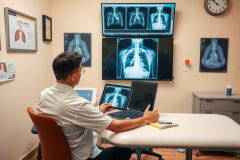
Discover how chest X-rays detect lung cancer and their limitations. Learn about alternative screenings like CT scans for better early detection and outcomes.

Discover the life-saving benefits of early lung cancer detection. Learn how timely screenings and recognizing symptoms can improve treatment outcomes and survival rates.
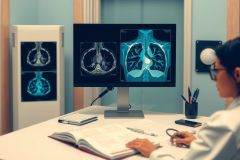
A suspicious lung nodule on a CT scan can signal cancer. Discover key factors and next steps to empower your health decisions. Act now for better outcomes.
Lung Cancer Screening & Early Detection
Lung cancer screening aims to detect cancer in people who do not have symptoms but are at increased risk of developing the disease. Finding lung cancer at an earlier stage may make more treatment options available and improve the chances of successful treatment. However, screening is not appropriate for everyone and should be based on an individual's risk factors and a discussion with a healthcare professional.
What Is Lung Cancer Screening?
Lung cancer screening involves testing people who have no signs or symptoms of the disease. The recommended screening method for eligible high-risk adults is low-dose computed tomography (LDCT), a scan that creates detailed images of the lungs using a lower radiation dose than a conventional diagnostic CT scan.
LDCT can identify small lung nodules or other abnormalities that may require further evaluation. Not every nodule is cancerous, and many are caused by benign conditions such as previous infections or inflammation. Screening programs therefore use established criteria to determine whether an abnormal finding needs monitoring or additional testing.
Who Should Be Screened for Lung Cancer?
Screening recommendations vary by country and medical organization. In the United States, the U.S. Preventive Services Task Force recommends annual LDCT screening for adults aged 50 to 80 who have a 20 pack-year smoking history and currently smoke or quit within the past 15 years. Screening should stop when a person has not smoked for 15 years or develops a health condition that substantially limits life expectancy or the ability or willingness to undergo curative lung surgery.
Other organizations may use different eligibility criteria. For example, some guidelines consider additional risk factors or different age ranges. Patients should consult their healthcare provider to determine whether screening is appropriate under the recommendations used in their country.
A pack-year is a measure of smoking exposure. Smoking one pack of cigarettes per day for 20 years, or two packs per day for 10 years, equals 20 pack-years.
Benefits and Limitations of Low-Dose CT Screening
Clinical studies have shown that LDCT screening can reduce lung cancer mortality among appropriately selected high-risk populations. Its main benefit is the possibility of detecting cancer before symptoms develop, when it may be more treatable.
Screening also has limitations. False-positive results can lead to additional scans or invasive procedures, and some detected cancers may be slow-growing and might never have caused symptoms during a person's lifetime. LDCT also exposes patients to a small amount of radiation and cannot detect every lung cancer.
These potential benefits and harms should be discussed through shared decision-making before starting a screening program.
What Happens After an Abnormal Screening Result?
An abnormal LDCT result does not automatically mean that a person has lung cancer. The next step depends on the size, appearance, and characteristics of the finding, as well as the patient's risk factors and previous imaging results.
Follow-up may involve another CT scan after a recommended interval, additional imaging, or a biopsy when clinically indicated. A multidisciplinary team may review suspicious findings to determine the most appropriate approach.
Screening vs. Diagnostic Testing
Screening is intended for people without symptoms. Individuals who have a persistent cough, coughing up blood, unexplained weight loss, chest pain, or other concerning symptoms should seek medical evaluation rather than wait for a routine screening appointment.
Diagnostic testing is designed to investigate symptoms or abnormal findings and may involve different imaging techniques and procedures.
Supporting Early Detection and Prevention
Lung cancer screening is most effective when combined with smoking cessation support and appropriate follow-up care. Quitting smoking reduces the risk of lung cancer and provides important health benefits, even for people with a long smoking history.
People who may qualify for screening should discuss their smoking history, occupational exposures, family history, and overall health with a qualified healthcare professional. A personalized assessment can help determine whether LDCT screening is appropriate and establish a safe, evidence-based follow-up plan.