Can Alternative Therapies Support Lung Cancer Treatment?
Explore how alternative therapies can enhance lung cancer treatment. Discover effective methods like acupuncture and meditation to improve well-being and recovery.
Explore lung cancer treatment options, including surgery, radiotherapy, chemotherapy, targeted therapy, and immunotherapy, and learn how cancer type, stage, and biomarkers guide personalized treatment decisions.

Explore how alternative therapies can enhance lung cancer treatment. Discover effective methods like acupuncture and meditation to improve well-being and recovery.

Explore early-stage lung cancer treatment options beyond surgery. Learn about effective non-surgical alternatives and make informed choices for better health.

Discover effective strategies to manage chemotherapy side effects in lung cancer patients. Learn how to alleviate nausea, fatigue, and mouth sores for a better treatment experience.
Get a free consultation and talk through symptoms, treatment options, and possible care paths with our coordination team.
Get Free Consultation
Discover the key differences between curative and palliative lung cancer treatments. Understand your options to make informed decisions for better health outcomes.
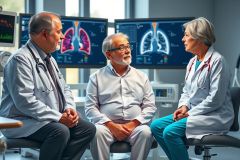
Discover how a multidisciplinary team enhances lung cancer treatment outcomes. Learn about key roles, benefits, and how to engage with your care team effectively.

Discover how palliative care enhances lung cancer treatment by relieving symptoms and providing emotional support. Explore essential benefits and supportive resources today.

Explore lung cancer clinical trials for access to innovative treatments and expert care. Discover how to find trials and enhance your treatment options today.

Discover effective Stage 4 lung cancer treatments like immunotherapy and targeted therapy that can improve survival rates and quality of life. Explore your options now.

Discover the latest advances in lung cancer treatment including targeted therapies and immunotherapy options that improve survival rates. Stay informed and empower your care.

Discover how personalized lung cancer treatment plans improve outcomes. Learn about genetic testing, tailored therapies, and the role of multidisciplinary teams in your care.
Lung Cancer Treatment Options
Lung cancer treatment has advanced significantly, offering patients a range of approaches based on the type and stage of cancer, tumor characteristics, and overall health. Treatment may aim to cure the disease, control its growth, reduce the risk of recurrence, or relieve symptoms and improve quality of life.
The two main types of lung cancer, non-small cell lung cancer (NSCLC) and small cell lung cancer (SCLC), often require different treatment strategies. A multidisciplinary oncology team evaluates each patient’s diagnosis to develop an individualized plan.
Surgery for Lung Cancer
Surgery may be an option for certain patients with early-stage non-small cell lung cancer when the tumor can be removed and the patient is medically fit for an operation. Procedures may include removing a small portion of the lung, a lobe, or, in selected cases, an entire lung.
The choice of surgery depends on the tumor’s location and extent, lung function, and the patient’s overall condition. Lymph nodes may also be removed or sampled to help determine the stage. Some patients receive chemotherapy, immunotherapy, or targeted therapy before or after surgery to reduce the risk of recurrence.
Radiotherapy
Radiotherapy uses high-energy radiation to destroy cancer cells or prevent them from growing. It may be used as a primary treatment for patients who cannot undergo surgery, in combination with chemotherapy, or to relieve symptoms caused by advanced disease.
Stereotactic body radiotherapy (SBRT) delivers highly focused radiation and may be suitable for selected patients with early-stage lung cancer. Other radiotherapy techniques are used for locally advanced disease or specific metastatic sites. The recommended approach depends on the cancer stage, tumor location, and treatment goals.
Chemotherapy
Chemotherapy uses medicines that circulate throughout the body to destroy or slow the growth of cancer cells. It may be given before surgery, after surgery, alongside radiotherapy, or as part of treatment for advanced lung cancer.
Chemotherapy remains an important component of treatment for both NSCLC and SCLC. The medications, number of cycles, and treatment schedule depend on the cancer type, stage, and patient’s ability to tolerate therapy. Side effects vary by regimen and may include fatigue, nausea, reduced blood counts, and an increased risk of infection.
Targeted Therapy and Molecular Testing
Targeted therapies are medicines designed to act on specific molecular changes that help cancer cells grow. For many patients with non-small cell lung cancer, biomarker testing is essential to identify whether a targeted treatment may be appropriate.
Depending on the tumor’s characteristics, testing may identify alterations involving genes such as EGFR, ALK, ROS1, BRAF, MET, RET, NTRK, or KRAS. The availability and suitability of targeted therapies depend on the exact alteration, cancer stage, previous treatments, and current clinical guidelines.
Targeted therapy is not appropriate for every patient. Molecular results should be interpreted by an oncology specialist to determine whether an approved treatment or clinical trial is suitable.
Immunotherapy
Immunotherapy helps the immune system recognize or respond to cancer. Immune checkpoint inhibitors are used in several lung cancer treatment settings and may be administered alone or in combination with chemotherapy or other treatments.
The decision to use immunotherapy may depend on factors such as PD-L1 expression, molecular findings, cancer stage, and previous treatment history. Some patients may also receive immunotherapy before or after surgery, or following chemoradiotherapy in specific clinical settings.
Immunotherapy can cause immune-related side effects involving organs such as the lungs, liver, intestines, or endocrine glands. Patients should be monitored carefully and report new or worsening symptoms promptly.
Treatment for Small Cell Lung Cancer
Small cell lung cancer is generally treated differently from NSCLC because it often grows and spreads more rapidly. Limited-stage disease may be treated with chemotherapy and radiotherapy, while extensive-stage disease commonly requires systemic treatment, which may include chemotherapy and immunotherapy.
Radiotherapy may also be used in selected circumstances to treat the brain or other areas. Treatment decisions depend on the stage, response to initial therapy, overall health, and the potential benefits and risks of additional treatment.
Supportive Care and Clinical Trials
Supportive and palliative care are important throughout lung cancer treatment. These services can help manage pain, breathlessness, fatigue, nutritional difficulties, and emotional concerns. Palliative care can be provided alongside treatments intended to control or cure cancer and is not limited to end-of-life care.
Clinical trials may offer access to new medicines, treatment combinations, or innovative approaches. Patients should discuss whether a suitable trial is available and understand the potential benefits, risks, and alternatives before participating.
Choosing the most appropriate lung cancer treatment requires accurate staging, pathology, and, when indicated, molecular testing. Patients should review their options with a qualified multidisciplinary oncology team to understand the goals, expected benefits, and possible side effects of each approach.