Quick Answer
An alternative benefit usually means your dental plan calculates payment for a tooth-coloured filling using the allowance for a covered alternative, such as another filling material. It affects the plan’s payment calculation, not your dentist’s clinical recommendation, and your out-of-pocket share depends on your plan and provider arrangement.
- A filling may be eligible for benefits even when the insurer bases payment on an alternative benefit.
- The plan’s allowance may be lower than the submitted fee, and your share may also depend on your deductible, coinsurance, annual maximum, and provider arrangement.
- An insurer’s payment rule does not establish which filling material is clinically suitable for your tooth.
- Plan rules may vary by tooth location, restoration type, procedure code, and policy wording.
- An explanation of benefits shows how a claim was processed and is not necessarily a bill.
- Compare the submitted procedure and tooth details with the insurer’s allowance, and ask the insurer and dental office to clarify unclear figures or assumptions.
- A pre-treatment estimate can help with planning, but it may not guarantee the final claim payment.
Your Dental Insurer Applies an Alternative Benefit to a Tooth-Coloured Filling: What Does That Mean?
An alternative benefit in dental insurance usually means your plan calculates its payment using a covered option other than the tooth-coloured filling your dentist submitted. The plan might base its allowance on a different filling material or benefit category. That payment rule does not, by itself, mean the tooth-coloured filling is clinically unnecessary or that your dentist must use another material. It can affect the amount the plan pays and what you may owe, depending on your policy and provider arrangement.
The wording can feel confusing because a plan may say a filling is covered while also applying an alternative benefit. “Covered” does not always mean the insurer pays the full fee. Your plan may set an allowed amount, apply a deductible or coinsurance, and limit payment based on an annual maximum. Those terms describe how the plan calculates benefits, not necessarily the treatment your dentist recommends.
Before treatment, or when reviewing an explanation of benefits (EOB), compare the submitted procedure with the plan’s assumed alternative and allowance. An EOB explains how a claim was processed and is not necessarily a bill. If any figure or assumption is unclear, ask the insurer and dental office to explain it. The estimate may help you plan, but the plan document and the final claim decision determine how the benefit is applied.
Restore Cavities, Cracks, and Damaged Teeth
Answer a few short questions and HealthNode will help you connect with the right restorative dentist for fillings or tooth repair.
Pain, Sensitivity, and Damage
This helps us understand whether you may need a simple filling, tooth restoration, root canal evaluation, or another treatment.
Previous Dental Care and Preferences
A few details help the dentist understand the best restoration option for your tooth.
Final Details
Share anything important so the dentist can better understand your case.
Contact information
Your information is only used to contact you and is never shared with third parties.
Your request has been received!
Thank you. If you have dental X-rays, photos of the damaged tooth, previous filling records, root canal records, treatment plans, or information about tooth pain or sensitivity, please keep them ready. A HealthNode consultant will guide you through the next step.
What changes when a plan applies an alternative benefit?
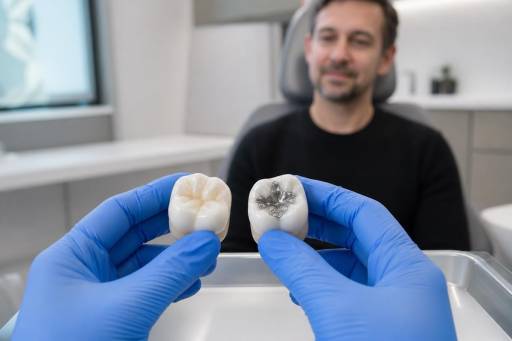
An alternative benefit is a plan provision that calculates payment as though a covered alternative service or material had been used. For a tooth-coloured filling, sometimes called a composite filling, the plan may calculate its benefit using an allowance for another filling material, such as amalgam. The specific rule depends on the plan wording and the tooth or restoration involved.
This distinction separates the insurer’s payment method from the clinical decision. Your dentist assesses the tooth and recommends an approach based on your dental needs. The plan’s allowance does not establish that another filling material is suitable for your tooth, and it does not direct your dentist to place that material.
If the allowance is lower than the fee for the submitted restoration, the plan may pay less than you expected. Your share can include the amount above the plan allowance as well as any deductible or coinsurance that applies. Ask the dental office to identify which part of its estimate comes from the alternative benefit and which part reflects other plan limits.
Coverage wording can also distinguish between the service being eligible for benefits and the amount the plan recognizes for payment. That is why “the filling is covered” and “the plan pays based on an alternative” may both appear in the same explanation. You can read more about the different types of dental fillings and restorations, but your plan document controls the benefit calculation.
How an allowance can change your estimated share
An allowed amount is the fee your plan recognizes when calculating a benefit. If a plan applies an alternative benefit, its allowance may be based on the covered alternative rather than the fee submitted for the tooth-coloured filling. Your potential share can also depend on your deductible, coinsurance, annual maximum, and any agreement between the insurer and dental office.
Here is a hypothetical example using fictional units, not prices. Suppose the submitted filling fee is 100 units and the plan’s alternative-benefit allowance is 70 units. If 10 units of deductible remain and the plan pays 50% of the eligible amount after the deductible, it would calculate 50% of 60 units, or 30 units, before considering any annual maximum or other plan rule. The patient’s estimated share could therefore be the difference between the submitted fee and the plan payment, subject to the provider arrangement and plan terms.
Coinsurance is the share of an eligible amount assigned to you, often expressed as a percentage. A deductible is the amount you may need to pay before the plan begins sharing eligible costs. An annual maximum is a limit on what the plan pays during a benefit period. If little or none of that maximum remains, the plan’s payment may be lower than the estimate suggests.
This example shows the moving parts, not a universal formula. Plans define eligible amounts and apply limits differently, and an estimate may not match the final claim. If you are comparing a proposed filling with general treatment costs, remember that tooth location, restoration size, and the fee schedule can all affect the amount submitted.
Why the plan may price a different filling material
A plan may use an alternative benefit because its contract sets payment according to particular materials, restoration types, or tooth locations. For example, a policy may describe different benefits for front and back teeth, or specify how it pays when a tooth-coloured restoration is submitted. These are plan rules, and they can vary even between policies offered by the same insurer.
Tooth location can matter because a plan may treat a filling on a front tooth differently from one on a back tooth. The number of surfaces restored or the procedure code submitted may also affect how the claim is classified. If the insurer’s assumed procedure does not appear to match the dental office’s submission, ask both parties to clarify the code, tooth number, and material recorded.
A benefit limit is not a clinical assessment. Your dentist considers the tooth’s condition, the location and extent of the damage, and the properties of suitable restorative materials when recommending care. The insurer applies the terms of your plan to determine its payment. These are separate decisions, and neither one automatically resolves the other.
If the recommended material and the insurer’s assumed alternative differ, ask your dentist to explain the clinical recommendation in plain language. You can then ask the insurer what wording supports its calculation. Clear answers can help you compare the proposed treatment and likely patient share without assuming that a plan’s payment rule is a judgment about what treatment you need.
What to compare on your EOB and plan documents
An explanation of benefits, or EOB, shows how the insurer processed a claim or estimate. It is not necessarily a bill, so wait for the dental office’s statement before treating an EOB balance as the amount due. Names for similar documents can differ by plan, especially across the United States and Canada, but the figures and explanations should show how the benefit was calculated.
Compare the submitted procedure and tooth location with the alternative benefit or allowed amount listed by the insurer. Then look at the insurer’s payment, deductible, coinsurance, annual maximum, and any amount identified as your responsibility. Check whether the EOB says the claim was processed using an alternative material or another benefit category. If a line is unclear, ask for the specific plan provision used.
Your plan booklet or contract may explain which fillings are eligible, how benefits are calculated, and whether network status changes the amount. Check the policy’s definitions and exclusions rather than relying only on a general coverage summary. If your dental care is outside your usual region or across a border, confirm how the plan treats the provider and claim before relying on an estimate.
Keep the estimate, the EOB, the dental office’s treatment plan, and any written answers together. If the insurer’s calculation seems to use the wrong tooth, procedure, or material, ask how to request a correction or review. A clear record makes it easier to discuss the claim without confusing the insurer’s payment with the dentist’s treatment recommendation.
Questions to ask before treatment or a claim review
Before treatment, ask the dental office which procedure code, tooth number, and filling material it plans to submit. Ask whether the insurer has reviewed that exact information or whether the estimate is based on a general inquiry. A pre-treatment estimate can help you plan, but it may not be a guarantee of final payment because claim processing can depend on the plan’s terms and details submitted.
Ask the insurer: “Which alternative benefit are you applying, and what plan wording supports it?” You can also ask how the allowed amount, deductible, coinsurance, remaining annual maximum, and network status affect the estimate. Request an explanation of whether the stated patient responsibility includes any amount above the plan allowance.
If you already received an EOB, ask whether the decision is final for that claim and what documents are needed to request a review or appeal. The insurer can explain its process and any applicable deadlines. A review may clarify the calculation, but there is no guarantee it will change the decision.
If the insurer and dental office give different estimates, ask each to identify the assumptions behind its figure. For instance, confirm whether both are using the same tooth location, filling material, procedure code, and provider status. Written clarification can help you decide what questions remain before proceeding, without treating an insurer’s payment estimate as a clinical recommendation.
Frequently Asked Questions
Q: Does an alternative benefit mean my tooth-coloured filling is not covered?
Restore Cavities, Cracks, and Damaged Teeth
Answer a few short questions and HealthNode will help you connect with the right restorative dentist for fillings or tooth repair.
Pain, Sensitivity, and Damage
This helps us understand whether you may need a simple filling, tooth restoration, root canal evaluation, or another treatment.
Previous Dental Care and Preferences
A few details help the dentist understand the best restoration option for your tooth.
Final Details
Share anything important so the dentist can better understand your case.
Contact information
Your information is only used to contact you and is never shared with third parties.
Your request has been received!
Thank you. If you have dental X-rays, photos of the damaged tooth, previous filling records, root canal records, treatment plans, or information about tooth pain or sensitivity, please keep them ready. A HealthNode consultant will guide you through the next step.
A: Not necessarily. It usually means the plan is calculating payment using a covered alternative or allowance, rather than the submitted filling fee. Check your plan wording and EOB to see how that rule affects your claim.
Q: Will I have to pay the difference for a composite filling?
A: You may have a share above the plan’s allowance, but the amount depends on your policy and provider arrangement. Deductibles, coinsurance, annual maximums, and network terms can also affect the calculation. Ask the dental office and insurer to explain the estimate before relying on it.
Q: Can my dentist choose the filling material for my tooth?
A: Your dentist recommends treatment based on an assessment of your tooth and dental needs. The insurer’s alternative-benefit rule determines how it calculates payment, not which material is clinically appropriate. Ask your dentist to explain the recommendation and discuss any cost concerns.
Q: Is my insurer’s filling estimate final before treatment?
A: An estimate may be useful for planning, but it may not guarantee what the insurer will pay after the claim is submitted. Final processing can depend on the plan terms and the information submitted. Ask the insurer what assumptions the estimate uses and whether it is binding under your plan.
Q: Can I ask the insurer to review an alternative-benefit decision?
A: You can ask how to request a review or appeal and what supporting information is required. Confirm any deadlines and whether the insurer needs a treatment plan or additional documentation. A review can clarify the decision, but it may not change the benefit.
Q: Does an alternative benefit apply to every tooth or filling?
A: Not always. The plan’s wording may distinguish by tooth location, restoration type, or other claim details. Ask the insurer whether the clause applies to the specific tooth and procedure in your estimate.
The information provided is for educational purposes only and does not constitute medical advice. Always consult with a healthcare professional for medical guidance specific to your situation.