Full-Mouth Prosthetics in Turkey From the USA: Can Treatment Be Finished in One Trip?
Full-mouth prosthetics in Turkey can often be completed in one trip, offering cost-effective dental restoration with quality care. Plan your visit confidently.
Learn how dentures and full-mouth prosthetics are planned, from dental examination and extractions to impressions, implant surgery, temporary teeth, fitting, and follow-up care.
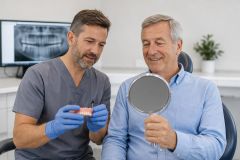
Full-mouth prosthetics in Turkey can often be completed in one trip, offering cost-effective dental restoration with quality care. Plan your visit confidently.
Immediate dentures and permanent dentures differ mainly in placement timing. Learn why timing influences fit, comfort, and oral health under CDC guidelines.
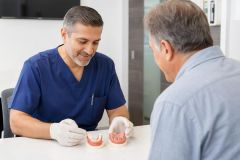
Full dentures follow-up adjustments after treatment in Turkey require planned visits and clear communication for optimal fit and comfort.
Get a free consultation and talk through symptoms, treatment options, and possible care paths with our coordination team.
Get Free Consultation
Discover how to select the right full-mouth prosthetic treatment by understanding options, key factors, and dental assessments for best results.
Discover how dentists evaluate the need for dentures through oral health assessments and key factors like jawbone structure and gum health.
Discover what happens during a denture consultation, including oral health assessment, denture options, and preparation tips for your appointment.

Discover how full-mouth prosthetic treatment is planned with thorough assessment, customized design, and patient involvement for successful dental rehabilitation.
Discover what happens during a full-mouth prosthetic consultation, including oral health evaluation, treatment planning, and preparation tips.
Learn how denture treatment is planned through personalized assessment, clinical factors, and patient communication for successful outcomes.
Planning dentures or full-mouth prosthetic treatment requires a comprehensive assessment of the teeth, gums, jawbone, bite, facial proportions, speech, and general health. The goal is not simply to fill spaces with artificial teeth but to create a restoration that is functional, maintainable, comfortable, and appropriate for the patient’s anatomy and lifestyle.
The planning process differs depending on whether the patient will receive a conventional removable denture, an implant-supported overdenture, a fixed full-arch restoration, or a combination of tooth- and implant-supported prosthetics.
The first consultation generally includes a discussion of the patient’s dental history, current symptoms, previous dentures, medical conditions, medications, smoking habits, and treatment expectations.
The dentist should ask about problems such as difficulty chewing, loose dentures, pain, gagging, speech changes, dry mouth, dissatisfaction with appearance, and inability to eat certain foods.
Patients who already wear dentures should bring them to the consultation. Existing prostheses can provide information about tooth position, bite height, facial support, speech, and previous areas of discomfort.
The dentist evaluates the remaining teeth, gums, tongue, oral tissues, jaw movement, facial symmetry, smile line, and relationship between the upper and lower jaws.
Every remaining tooth should be assessed before planning full-mouth treatment. Examination may include dental X-rays, sensitivity tests, gum measurements, mobility assessment, and evaluation of existing crowns or fillings.
Some teeth may be healthy enough to retain. Others may require fillings, root canal treatment, crowns, gum therapy, or extraction.
The decision to remove all remaining teeth is irreversible. Patients should receive a tooth-by-tooth explanation and understand whether any teeth could reasonably be preserved.
Extraction may be recommended when teeth have extensive decay, severe periodontal bone loss, fractures, recurrent infection, or insufficient structure to support restoration.
Healthy gums and sufficient bone are important for both removable and implant-supported prosthetics. Active periodontal disease should be treated before definitive prosthetic care whenever possible.
For traditional dentures, the shape and quality of the supporting gums and jaw ridges affect fit and stability. Sharp bone edges, irregular ridges, excess tissue, or shallow oral anatomy may require pre-prosthetic surgery.
For implant-supported treatment, three-dimensional imaging is often used to measure bone height and width, identify nerves and sinuses, and determine possible implant positions.
Bone grafting, sinus lift surgery, ridge augmentation, or other preparatory procedures may be required when sufficient implant support is not available.
Medical history can affect treatment eligibility, healing, implant success, and anesthesia planning. Conditions such as uncontrolled diabetes, bleeding disorders, immune disease, severe osteoporosis, and cardiovascular or respiratory problems may require additional assessment.
Certain medications can influence bleeding, infection risk, or bone healing. Patients should provide a complete medication list and should not stop prescribed medication without guidance.
Smoking and nicotine use can increase implant and graft complications. The treatment team should discuss smoking cessation and explain how continued use may affect prognosis.
Patients with limited hand movement, visual impairment, cognitive conditions, or dependence on a caregiver may require prostheses that are easier to insert, remove, and clean.
Panoramic X-rays can help identify tooth roots, infections, bone levels, impacted teeth, and jaw conditions. Cone beam computed tomography may be used for implant planning or complex anatomy.
Digital scans or traditional impressions create a model of the teeth and gums. Facial photographs, jaw records, and digital smile design may support selection of tooth size, shape, color, and position.
For fixed implant treatment, software may be used to plan implant positions according to both the jawbone and the planned prosthetic teeth. Surgical guides may help transfer this digital plan to the mouth.
Digital planning can improve communication and precision, but it does not eliminate the need for clinical judgment or adjustment during treatment.
The written treatment plan should identify:
Patients should understand whether the proposed teeth are removable by the patient, removable only by a dentist, or permanently cemented or screwed to implants.
When teeth need to be removed, extraction may be completed before denture production or on the day an immediate prosthesis is inserted.
The dentist or surgeon may reshape sharp bone, remove infected tissue, or smooth the jaw ridge to improve prosthetic fit. This procedure is sometimes called alveoloplasty.
After extractions, the gums and bone begin to change. Swelling decreases, sockets heal, and the jaw ridge gradually remodels. These changes can affect denture fit.
Patients receiving immediate dentures should expect adjustment appointments during healing.
The conventional denture process usually involves several clinical and laboratory stages.
Initial impressions or digital scans record the shape of the gums and jaw. More precise final impressions may then be taken using custom trays.
The dentist records the bite relationship and determines the vertical dimension, which influences facial height, lip support, speech, and chewing function.
Artificial teeth are selected according to facial proportions, age, remaining dental information, patient preferences, and natural appearance.
A trial denture with teeth set in wax may be placed in the mouth before the final prosthesis is processed. This allows evaluation of tooth position, smile appearance, speech, bite, and facial support.
The patient should use the trial stage to communicate concerns. Major changes are more difficult after the final denture is manufactured.
The completed denture is fitted and checked for pressure areas, stability, bite contacts, speech, and appearance. Follow-up adjustments are common and should be considered part of normal treatment.
Immediate denture planning begins before extraction. The dentist records the existing tooth position and estimates the shape of the gums after removal.
The denture is produced in advance and inserted shortly after the teeth are extracted. It can act as a temporary dressing and maintain appearance during healing.
The patient should follow specific instructions about when to remove the denture during the first day, how to manage bleeding, and how to clean both the mouth and prosthesis.
As the gums shrink, the denture may loosen. Temporary liners or adjustments may improve the fit. A permanent reline or new denture is often needed after healing.
International patients should arrange local follow-up before travelling home because immediate denture adjustments may be required unexpectedly.
Treatment begins with implant assessment and prosthetic planning. The implants should be positioned according to the planned denture rather than placed without considering the final restoration.
Teeth may be extracted and implants placed during the same procedure in selected patients. Other cases require extraction and healing before implant surgery.
After implant placement, a healing period allows osseointegration. The patient may use a modified temporary denture, but excessive pressure over the surgical areas should be avoided.
Once the implants are stable, attachment components are connected and the final overdenture is produced or adapted.
The dentist checks retention, insertion and removal, bite, speech, appearance, and hygiene access. Patients must learn how to clean both the denture and implant components.
Fixed full-arch treatment may include extraction, implant placement, temporary fixed teeth, healing, and delivery of the final bridge.
Some patients may receive implants and a fixed temporary restoration on the same day or within a short period. This is often described as immediate-load or same-day teeth.
Immediate fixed teeth are possible only when the implants achieve sufficient initial stability and the bite can be controlled. Patients must follow dietary restrictions because the implants are still healing.
The temporary bridge can help maintain appearance and may be used to test tooth length, speech, smile line, and bite. It should not be confused with the final prosthesis.
After osseointegration, new impressions or digital scans may be taken. The implant positions are recorded accurately, and the laboratory produces the final bridge.
The dentist may use verification jigs or prototype restorations to confirm fit before manufacturing the definitive prosthesis.
The final bridge is attached to the implants, frequently with screws. Screw access points are then covered with restorative material.
The patient receives instructions on cleaning underneath the bridge, around implant connections, and along the gum line.
Temporary teeth may include immediate dentures, removable healing dentures, provisional implant bridges, or other short-term restorations.
The temporary solution should be discussed before treatment begins. Patients should understand whether they will ever be without visible teeth, how stable the temporary prosthesis will be, and which dietary limitations apply.
Temporary restorations may fracture or loosen, particularly when the patient eats hard foods or grinds their teeth. International patients should know how repairs will be handled after they return home.
Correct bite design is essential for comfort and prosthetic durability. The dentist evaluates how the upper and lower teeth contact during closing, speaking, and jaw movement.
An incorrect bite can contribute to denture movement, sore gums, muscle discomfort, jaw-joint symptoms, implant overload, screw loosening, and prosthetic fracture.
Patients who have been without teeth for a long time may require careful restoration of facial height and jaw relationships. Excessively increasing the bite height can cause discomfort and speech problems.
Temporary or trial prosthetics may be used to test the proposed bite before final treatment.
Artificial teeth should be selected to suit the face, lips, smile line, age, and patient preferences. An extremely white or perfectly uniform appearance may not look natural for every patient.
The amount of artificial gum material is also important. It may replace tissue lost after long-term tooth loss and support the lips and cheeks.
Patients should review tooth color, shape, size, arrangement, and visibility during speech and smiling. Photographs or digital previews may support communication, but the final result may still differ from a computer simulation.
Treatment duration depends on the prosthesis and the need for surgery.
A conventional removable denture may sometimes be produced during one trip, although several appointments are required for impressions, bite records, trial fitting, delivery, and adjustments.
Immediate dentures require extraction and continued follow-up as healing changes the fit.
Implant-supported treatments usually require multiple stages. A first trip may include consultation, extraction, implant placement, and temporary teeth. A second trip several months later may be needed for the final restoration.
Bone grafting may extend the timeline and create an additional treatment stage before implant placement.
Clinics offering full-mouth treatment within a few days should explain which parts are temporary and which are final. Biological healing cannot be accelerated simply to match a travel package.
Patients may submit X-rays, CT scans, dental reports, photographs, and medical information for preliminary review.
Remote review can help estimate treatment possibilities, but the final plan may change after clinical examination, new imaging, evaluation of tooth mobility, gum measurements, and assessment of the bite.
Patients should avoid booking non-refundable travel based solely on an unconfirmed package quote.
Full-mouth prosthetic care involves both clinical and laboratory expertise. Patients should ask who will perform extractions, place implants, design the prosthesis, and provide follow-up care.
The quality of the dental laboratory can strongly influence fit, appearance, strength, and repairability. Patients may ask whether the clinic has an in-house laboratory or works with an external provider.
For implant treatment, the clinic should provide the implant brand, model, component information, and documentation needed for future maintenance.
Patients should consider whether compatible parts and trained clinicians are available in their home country.
Before leaving the treatment country, patients should receive relevant records, including:
The treatment provider should explain which problems require return to the original clinic and which can be managed by a local dentist.
A full-mouth prosthetic treatment should be considered a long-term rehabilitation process rather than a single purchase. Successful planning includes diagnosis, temporary teeth, healing, final prosthetic delivery, maintenance, repair, and coordination of care after the patient returns home.