Complete Dentures or Implant-Supported Prosthetics: Which Patients Need More Stability?
Complete dentures and implant-supported prosthetics offer different levels of stability. Learn which option suits your dental needs best.
Explore complete dentures, partial dentures, implant-supported overdentures, fixed full-arch restorations, and other prosthetic options used to replace multiple or all missing teeth.

Complete dentures and implant-supported prosthetics offer different levels of stability. Learn which option suits your dental needs best.

Private dentures offer more material choices than NHS dentures, giving you better customization for comfort, durability, and aesthetics.
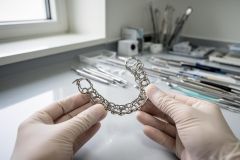
Explore metal framework partial dentures, their design, benefits, and care tips to improve your tooth replacement options effectively.
Get a free consultation and talk through symptoms, treatment options, and possible care paths with our coordination team.
Get Free Consultation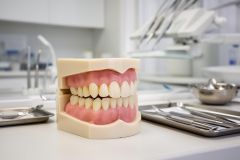
Learn about acrylic dentures, a common dental prosthetic for tooth replacement. Explore types, benefits, fitting, and care tips.
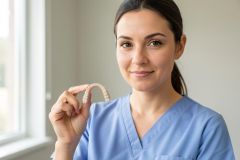
Learn about flexible partial dentures, their benefits, suitability, care tips, and alternatives for effective dental restoration.
Learn about removable dentures, their types, benefits, and care tips to restore your smile and oral function effectively.
Learn what hybrid dentures are, their benefits, and how they compare to traditional dentures and implants for effective tooth replacement.

Learn how implant-supported dentures offer a stable, comfortable dental restoration option with long-term oral health benefits.

Explore the main types of dentures, complete, partial, and implant-supported, and learn which option best suits your dental health and lifestyle.
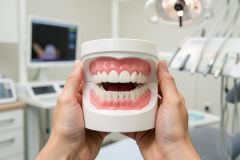
Dentures and full-mouth prosthetics are used to replace several missing teeth or an entire upper or lower dental arch. These treatments can restore smile appearance, support the lips and cheeks, improve speech, and help patients chew more comfortably after extensive tooth loss.
The most suitable prosthetic option depends on the number and condition of the remaining teeth, gum health, jawbone volume, bite relationship, medical history, treatment expectations, ability to maintain oral hygiene, and available budget. Some patients may benefit from a traditional removable denture, while others may be suitable for an implant-supported or fixed full-arch restoration.
Patients considering dentures or full-mouth prosthetics abroad should understand that these treatments vary significantly in design, stability, materials, cost, and treatment duration. A low-cost removable denture and a fixed implant-supported bridge are not equivalent treatments, even though both may replace a complete arch of teeth.
Complete dentures, also known as full dentures, replace all natural teeth in the upper jaw, lower jaw, or both jaws. They are removable prostheses supported mainly by the gums and the underlying jawbone.
An upper complete denture usually covers the roof of the mouth and may achieve retention through suction. A lower complete denture has a horseshoe-shaped design that leaves space for the tongue. Lower dentures are often more difficult to stabilize because they have a smaller supporting surface and are affected by tongue, cheek, and jaw movements.
Complete dentures may be considered when all teeth are already missing or when the remaining teeth cannot be restored predictably. Teeth may require extraction because of severe decay, advanced gum disease, fractures, infection, or extensive structural damage.
A complete denture is designed using impressions or digital scans, bite measurements, facial analysis, and information about the desired tooth shape and color. The dentist should assess lip support, smile line, speech, jaw relationship, and the amount of space available for the prosthesis.
Traditional complete dentures are generally more affordable and do not require implant surgery. However, they may provide less chewing efficiency and stability than implant-supported alternatives. Adhesives may help some patients, but they cannot correct a denture that fits poorly.
Partial dentures replace several missing teeth while preserving the remaining natural teeth. They may be made from acrylic, metal frameworks, flexible materials, or a combination of components.
Acrylic partial dentures are often used as temporary or lower-cost restorations. They can replace missing teeth relatively quickly but may be thicker and less stable than metal-framework options.
Cast-metal partial dentures use a customized framework that connects the replacement teeth and rests on selected natural teeth. Clasps, rests, attachments, or crowns may help retain the prosthesis.
Flexible partial dentures are produced from thermoplastic materials and may be less visibly supported by metal clasps. However, they are not appropriate for every bite or pattern of tooth loss and may be more difficult to adjust or repair.
Partial denture planning requires careful evaluation of the remaining teeth. Teeth supporting the prosthesis must be assessed for decay, gum disease, mobility, fractures, and previous restorations. Some teeth may require fillings, crowns, root canal treatment, or periodontal therapy before the denture is made.
A poorly designed partial denture can place damaging pressure on the supporting teeth and gums. The design should distribute chewing forces appropriately and allow the patient to clean around the remaining teeth.
Immediate dentures are inserted shortly after the remaining teeth are extracted. They allow patients to avoid being without visible teeth during the initial healing period.
Because immediate dentures are produced before extraction, the dentist must estimate the shape of the gums after the teeth are removed. The fit may change considerably as swelling decreases and the extraction sites heal.
Immediate dentures often require several adjustments, temporary liners, relining, or eventual replacement. Patients should not assume that the immediate prosthesis will automatically serve as the final long-term denture.
For international patients, immediate dentures can provide a temporary cosmetic and functional solution during dental travel. However, the patient should have a clear plan for adjustments after returning home because the gums and jawbone may change rapidly during the first months after extraction.
Clinics should explain whether the quoted package includes only the immediate denture or also covers a later reline or final prosthesis.
Conventional dentures are generally produced after tooth extraction sites and gum tissues have completed an initial period of healing. Waiting for tissue changes to stabilize can allow the dentist to create a more accurate fit.
The healing period varies according to the number of teeth removed, the patient’s health, jawbone condition, and whether additional surgery is performed. During this period, the patient may use an immediate or temporary denture.
Conventional dentures still require adjustments as the jaw changes over time. However, they may provide a more predictable initial fit than dentures produced before extraction.
International patients who travel for conventional dentures may require more than one visit. The first visit may involve examination, extraction, and temporary teeth, while a later visit may be needed for the final prosthesis.
Implant-supported overdentures are removable dentures attached to dental implants placed in the jawbone. The implants provide additional retention and can reduce movement during speaking and chewing.
The denture remains removable by the patient for cleaning. It may attach to individual implant components, a metal bar, locator attachments, or another retention system.
A lower overdenture may be supported by two or more implants, although the exact number depends on jaw anatomy, prosthetic design, bite forces, and treatment goals. Upper overdentures often require additional implants because upper-jaw bone is generally softer and the prosthesis may need broader support.
Implant-supported overdentures can offer greater stability than traditional removable dentures. Patients may experience improved confidence, speech, and chewing ability, particularly when a lower complete denture has been difficult to control.
The implants, attachments, and denture all require maintenance. Retentive components may wear and need replacement. The denture may also need relining, repair, or renewal as the jaw and soft tissues change.
Implant-supported overdentures involve surgery and may require bone grafting. Patients should be assessed for gum disease, jawbone volume, smoking, diabetes, medications, and other factors that can influence implant healing.
Fixed full-arch restorations replace all teeth in an arch using a bridge supported by several dental implants. These restorations remain in the mouth and can only be removed by a dental professional.
Patients may refer to these treatments as fixed full-mouth implants, full-arch dental implants, implant bridges, or permanently fixed teeth. Specific treatment concepts may use four, six, or more implants to support an arch, depending on bone quality, implant position, bite forces, and prosthetic design.
Fixed restorations may provide greater stability and chewing efficiency than removable dentures. They can also reduce or eliminate palatal coverage in the upper jaw, which may improve taste perception and comfort for some patients.
However, fixed full-arch treatment is more complex and expensive than a conventional denture. It requires implant surgery, detailed prosthetic planning, temporary teeth, laboratory production, and long-term maintenance.
The patient must be able to clean underneath the bridge and around the implants. Specialized floss, interdental brushes, water flossers, and professional cleaning may be required.
Fixed does not mean maintenance-free or guaranteed for life. The prosthetic teeth, framework, screws, and implant components can wear, loosen, chip, or fracture. The bridge may need to be removed professionally for inspection or repair.
All-on-4 treatment uses four strategically positioned implants to support a fixed full-arch prosthesis. The rear implants may be placed at an angle to use available bone and potentially reduce the need for certain grafting procedures.
This approach may allow selected patients to receive a fixed temporary restoration shortly after implant placement. However, immediate loading depends on implant stability, bone quality, bite control, and the absence of factors that could compromise healing.
Not every patient is suitable for treatment with four implants. Some cases may benefit from additional implants to improve support or reduce the effect of a future implant complication.
Patients should understand whether the treatment being offered follows a specific branded protocol or uses “All-on-4” as a general marketing term. The clinic should explain the number, position, brand, and expected role of each implant.
All-on-6 and other multi-implant approaches use six or more implants to support a full-arch bridge. Additional implants may distribute chewing forces across a larger area and provide more prosthetic options.
The appropriate number of implants depends on the available bone, arch shape, opposing teeth, bite forces, material selection, and the possibility of implant failure. More implants do not automatically guarantee a better result, and every patient requires individualized planning.
Patients should compare the complete prosthetic design rather than focusing only on implant number. The shape of the bridge, hygiene access, framework strength, gum support, and laboratory quality all influence the outcome.
Some patients have several missing teeth but do not require replacement of a complete arch. An implant-supported bridge can replace a group of missing teeth using fewer implants than the number of teeth being restored.
For example, several artificial teeth may be supported by implants positioned at each end of the missing section. This can avoid preparation of healthy neighboring teeth.
Implant-supported bridges require sufficient bone, healthy surrounding tissues, and a carefully balanced bite. They may be produced from zirconia, ceramic, metal-ceramic, acrylic, composite, or hybrid materials.
“Snap-in dentures” is a patient-friendly term often used for removable implant-supported overdentures. The denture connects to implants through attachments that provide a noticeable locking or snapping sensation.
These dentures can be removed by the patient and are not the same as fixed implant bridges. Marketing materials may sometimes create confusion between removable snap-in dentures and permanent fixed teeth.
Patients should ask whether the planned prosthesis is removable, how many implants are used, which attachment system is included, and how frequently the retentive components may need replacement.
A bar-retained overdenture uses a metal bar connected to several implants. The removable denture attaches to the bar through clips or other components.
The bar can help distribute force and may improve denture stability. However, it requires adequate space, precise laboratory production, and careful cleaning around and underneath the bar.
Patients with limited manual ability may find cleaning more challenging. The dentist should evaluate whether the patient can maintain the prosthesis before recommending this design.
The terms implant-retained and implant-supported are sometimes used interchangeably, but they can describe different methods of force distribution.
An implant-retained denture may use implants primarily to improve retention while the gums continue to support much of the chewing pressure. An implant-supported design transfers a greater proportion of chewing forces to the implants.
Patients should ask how the denture will be supported, whether it will move during chewing, and what maintenance the attachment system requires.
A hybrid full-arch prosthesis generally includes a rigid internal framework covered by acrylic, composite, or another tooth-colored material. It is fixed to dental implants with screws.
Hybrid restorations can provide a fixed solution with replaceable prosthetic teeth and gum material. Acrylic and composite components may absorb some chewing force but can wear, stain, chip, or fracture over time.
Repairs may be more manageable than with some full-contour ceramic restorations, although maintenance frequency depends on the design and bite.
Zirconia full-arch bridges are designed to provide strength, stain resistance, and a ceramic appearance. They may be produced as monolithic zirconia or combined with layered ceramic in selected areas.
Zirconia is more rigid than acrylic-based materials and may produce a different chewing sensation. The bite must be carefully designed, particularly when the opposing arch contains natural teeth, implants, or another zirconia restoration.
The material can chip or fracture, although major failures are relatively uncommon when planning, production, and bite control are appropriate. Repairs may be more complex than repairs to acrylic restorations.
Acrylic or composite teeth may be attached to a metal or polymer framework. These restorations can provide a lighter and more repairable option than full-contour ceramic bridges.
The prosthetic teeth may wear, stain, detach, or fracture over time. Patients who grind their teeth or have strong bite forces may need more frequent maintenance.
The clinic should explain whether acrylic is being used for a temporary restoration, a definitive restoration, or both. Material quality and laboratory technique can influence appearance and durability.
Temporary prosthetics may be placed during healing after extractions, bone grafting, or implant surgery. They protect appearance and can help the patient adapt to a planned tooth position and bite.
Temporary restorations are not designed to offer the same durability as final prosthetics. Patients may need to follow a soft diet and avoid excessive pressure while implants integrate with the bone.
The final bridge or denture is usually produced after healing and confirmation of implant stability. International patients should ask whether the final restoration requires a second trip and how long the temporary teeth are expected to remain in use.
Not every full-mouth prosthetic treatment requires extraction of all remaining teeth. Some patients can preserve selected natural teeth and receive combinations of crowns, bridges, partial dentures, implants, and other restorations.
Preserving healthy or strategically useful teeth may support function and reduce the extent of surgery. However, maintaining teeth with an uncertain prognosis beneath an extensive restoration can create future complications.
The treatment team should assess each tooth individually and explain why it is being preserved or removed.
Removable dentures are generally less expensive, easier to clean outside the mouth, and do not always require implant surgery. They may be appropriate for patients who prefer a less invasive treatment or have medical or anatomical limitations.
Fixed implant restorations can offer greater stability and chewing efficiency but involve surgery, higher costs, more complex cleaning, and ongoing professional maintenance.
Implant-supported removable overdentures can provide a middle option. They may offer improved retention without the cost and complexity of a fully fixed bridge.
For international patients, treatment selection should consider not only appearance and price but also the number of trips, healing periods, future maintenance, repair availability, and access to compatible implant or prosthetic components in the home country.
A responsible clinic should explain all reasonable alternatives, including retaining natural teeth when possible, rather than recommending extraction and full-arch implants solely because they can be completed as a package.