Quick Answer
Hybrid dentures are fixed dental prosthetics anchored onto implants in the jawbone, combining the stability of implants with the convenience of dentures to replace missing teeth effectively.
- Hybrid dentures are secured onto dental implants, providing improved stability and function compared to traditional removable dentures.
- They help preserve jawbone health by transmitting chewing forces through implants, reducing bone loss.
- Hybrid dentures eliminate common issues of removable dentures such as slipping, clicking, and sore spots.
- They are custom-made to resemble natural teeth and gums, enhancing aesthetics and confidence.
- Ideal candidates have sufficient jawbone density and seek a fixed, stable tooth replacement option.
- The procedure involves implant placement, healing, and denture attachment, typically taking several weeks to months.
- Hybrid dentures offer a balance of cost, stability, and treatment time compared to traditional dentures and implant-supported bridges.
What Are Hybrid Dentures?
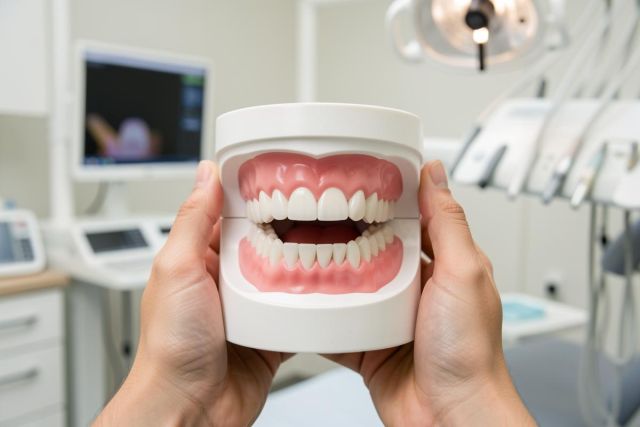
Hybrid dentures are a type of dental prosthetic designed to replace missing teeth by combining the stability of dental implants with the convenience of dentures. They consist of a fixed denture secured onto dental implants, providing improved function and aesthetics compared to traditional removable dentures.
Unlike conventional dentures that rely on suction or adhesives, hybrid dentures attach firmly to implants anchored in the jawbone, enhancing comfort and chewing ability. Because they are fixed in place, hybrid dentures eliminate many common frustrations associated with removable dentures, such as slipping, clicking noises, and sore spots. This can significantly improve your confidence when eating, speaking, and smiling.
Hybrid dentures also help maintain the shape of your face by preventing bone loss that often occurs after tooth loss. If you are exploring options for tooth replacement, understanding hybrid dentures, their advantages, and how they differ from other prosthetics can help you make an informed decision about your oral health care. It is important to consider factors like your oral health status, lifestyle, and budget when evaluating whether hybrid dentures are right for you.
Restore Your Smile With Dentures or Full-Mouth Prosthetics
Answer a few short questions and HealthNode will help you connect with the right prosthodontic or restorative dental specialist.
Comfort, Function, and Appearance
This helps us understand whether you may need new dentures, denture adjustment, implant-supported dentures, or full-mouth prosthetics.
Dental History and Treatment Planning
A few details help the specialist understand whether you may need extractions, denture relining, implants, or full-mouth reconstruction.
Health and Prosthetic Factors
These details help the specialist understand any factors that may affect healing, denture fit, or implant-supported options.
Contact information
Your information is only used to contact you and is never shared with third parties.
Your request has been received!
Thank you. If you have dental X-rays, panoramic X-ray, CBCT scan, previous denture records, implant records, extraction notes, gum treatment records, or photos of your current dentures, please keep them ready. A HealthNode consultant will guide you through the next step.
Hybrid Dentures Explained: Features and Benefits
Hybrid dentures are a specialized type of dental prosthetic that combines the benefits of traditional dentures and implant-supported solutions. They are typically made by attaching a full arch of replacement teeth to a metal framework, which is securely anchored onto dental implants embedded in the jawbone. This creates a fixed, stable prosthesis that functions much like natural teeth.
These dentures are often chosen by patients who require full-arch tooth replacement but desire greater stability than what removable partial or complete dentures offer. Unlike conventional dentures that rely on adhesives or suction, hybrid dentures depend entirely on implants for support. This design improves chewing efficiency, speech, and overall oral comfort.
The metal framework provides strength and durability, while the prosthetic teeth are custom-crafted to closely match the natural appearance of your smile. Because hybrid dentures are fixed in place, they can better withstand the forces of biting and chewing compared to traditional dentures. Additionally, by transmitting chewing forces through the implants, hybrid dentures help preserve the underlying jawbone, stimulating bone maintenance and reducing bone loss over time.
Understanding these basics highlights why hybrid dentures are increasingly recommended for individuals seeking a reliable and comfortable full-arch tooth replacement option, especially those who have experienced significant tooth or bone loss that may limit other implant approaches.
Benefits of Choosing Hybrid Dentures Over Traditional Options
Hybrid dentures provide several key advantages over traditional dentures and other tooth replacement methods. One of the most significant benefits is improved stability. Because hybrid dentures are anchored to dental implants, they stay firmly in place without shifting or slipping, a common problem with conventional dentures. This stability enhances comfort and allows for more effective chewing, which can improve nutrition and meal enjoyment.
Another important benefit is the preservation of the jawbone. The implants supporting hybrid dentures stimulate bone health, reducing the bone loss often seen with removable dentures. This helps maintain facial structure and prevents the sunken appearance that can occur after tooth loss.
In addition to functional improvements, hybrid dentures offer aesthetic advantages. They are custom-made to resemble natural teeth and gums, providing a confident and attractive smile. Their fixed nature makes them feel more like your own teeth, which can improve speech and overall quality of life. Hybrid dentures also reduce the need for denture adhesives and eliminate discomfort caused by denture movement.
Maintenance is another area where hybrid dentures have an edge. They are generally easier to care for than removable dentures, simplifying daily oral hygiene routines. However, regular dental check-ups remain important to ensure the health of the implants and surrounding tissues.
Overall, hybrid dentures represent a modern and effective solution for full-arch tooth replacement, offering enhanced oral health, comfort, and patient satisfaction.
Who Are Ideal Candidates for Hybrid Dentures?
Ideal candidates for hybrid dentures are typically individuals who have lost most or all of their teeth and are seeking a stable, long-term replacement option. These patients usually desire a fixed prosthesis that offers improved function and comfort compared to traditional removable dentures.
Candidates must have sufficient jawbone density to support dental implants, which serve as the foundation for the hybrid denture. A thorough dental health assessment is essential to evaluate bone volume, gum health, and overall oral condition. Some patients with bone loss or certain medical conditions may require preparatory treatments, such as bone grafting, before implant placement.
Individuals who experience discomfort, instability, or difficulty tolerating removable dentures often benefit from hybrid dentures. Personal preferences also influence candidacy; those who prefer a prosthesis that does not need to be removed for cleaning and offers superior chewing ability may find hybrid dentures suitable.
It is important to note that hybrid dentures require a commitment to good oral hygiene and regular dental visits to maintain implant health. Your dentist will help determine if hybrid dentures align with your oral health status, lifestyle goals, and ability to undergo minor surgical procedures.
Ultimately, the decision to pursue hybrid dentures should be made after careful consideration of your overall health, dental needs, and personal preferences.
The Procedure and What to Expect
The process of getting hybrid dentures begins with a comprehensive consultation and dental examination. During this initial phase, imaging studies such as X-rays or CT scans are used to assess bone health and guide the planning of implant placement.
In the surgical phase, dental implants are inserted into the jawbone under local anesthesia or sedation. The number of implants varies depending on the individual case, but typically four to six implants are placed to support a full arch of teeth. After implant placement, a healing period of several months allows the implants to securely integrate with the bone, a process called osseointegration. Temporary dentures may be provided during this time to maintain aesthetics and function.
Once healing is complete, impressions are taken to fabricate the hybrid denture, which is then attached to the implants. The fitting process may require adjustments to ensure optimal comfort and function. Recovery usually involves mild swelling or discomfort that resolves within a few days. Patients are advised to follow specific care instructions to promote healing.
After placement, regular dental visits are important to monitor oral health and maintain the denture. Maintaining good oral hygiene and avoiding habits that could damage the implants or denture are essential for long-term success.
Overall, the procedure offers a predictable and effective way to restore your smile and oral function. However, it requires patience and commitment to the treatment timeline and aftercare recommendations.
Comparing Hybrid Dentures to Other Tooth Replacement Options
Hybrid dentures differ significantly from traditional dentures and dental implants in their design and function. Traditional dentures are removable and rest directly on the gums, which can cause movement, discomfort, and the need for adhesives. These dentures may also lead to sore spots and make chewing certain foods challenging.
Dental implants, on the other hand, replace individual teeth or support bridges. While they offer excellent stability, full-arch replacements with implants can require more implants and involve higher costs. Implant-supported bridges provide very high stability but tend to be more invasive and expensive due to the number of implants needed.
Hybrid dentures combine the benefits of dental implants with the convenience of a fixed denture. They offer a stable prosthesis without requiring as many implants as full implant-supported bridges. Compared to traditional dentures, hybrid dentures provide better chewing ability and help preserve bone. They also often have a shorter treatment time and lower cost than full implant-supported bridges.
Choosing the right option depends on your oral health, budget, and personal preferences. Hybrid dentures offer a balanced solution, combining function, aesthetics, and cost-effectiveness for many patients seeking full arch restoration.
It is important to discuss your specific needs and expectations with your dental professional to determine the best tooth replacement option for your situation. The table below summarizes key differences to consider when evaluating these options:
Restore Your Smile With Dentures or Full-Mouth Prosthetics
Answer a few short questions and HealthNode will help you connect with the right prosthodontic or restorative dental specialist.
Comfort, Function, and Appearance
This helps us understand whether you may need new dentures, denture adjustment, implant-supported dentures, or full-mouth prosthetics.
Dental History and Treatment Planning
A few details help the specialist understand whether you may need extractions, denture relining, implants, or full-mouth reconstruction.
Health and Prosthetic Factors
These details help the specialist understand any factors that may affect healing, denture fit, or implant-supported options.
Contact information
Your information is only used to contact you and is never shared with third parties.
Your request has been received!
Thank you. If you have dental X-rays, panoramic X-ray, CBCT scan, previous denture records, implant records, extraction notes, gum treatment records, or photos of your current dentures, please keep them ready. A HealthNode consultant will guide you through the next step.
| Option | Description | Stability | Cost Range | Treatment Time |
|---|---|---|---|---|
| Traditional Dentures | Removable prosthetic on gums | Lower | Generally lowest | Few weeks |
| Hybrid Dentures | Fixed denture on implants | High | Moderate | Several weeks to months |
| Implant-Supported Bridge | Multiple implants replacing teeth | Very High | Highest | Several months |
Understanding these distinctions can help you weigh the benefits and limitations of each choice in relation to your oral health goals and lifestyle.
Frequently Asked Questions
Q: Are hybrid dentures permanent?
A: Yes, hybrid dentures are designed to be a long-term solution and can last several years with proper care. Their fixed attachment to implants provides durability and stability unlike removable dentures.
Q: How do I care for hybrid dentures?
A: Caring for hybrid dentures involves regular brushing and flossing around the implants, avoiding hard or sticky foods, and attending routine dental check-ups to monitor oral health.
Q: Are hybrid dentures more expensive than traditional dentures?
A: Hybrid dentures usually have a higher initial cost than traditional dentures due to the implant surgery involved. However, their durability and improved function often make them a cost-effective choice over time.
Q: Can hybrid dentures be adjusted if I experience discomfort?
A: Yes, dentists can make adjustments to hybrid dentures to improve fit and comfort. If you notice discomfort, it is important to consult your dental provider promptly.
Q: How long does the process of getting hybrid dentures take?
A: The entire process typically spans a few weeks to several months, including consultation, implant placement, healing, denture fabrication, and fitting.
Q: Are hybrid dentures suitable for everyone?
A: Not everyone is a candidate for hybrid dentures. A thorough dental evaluation is necessary to assess bone health and oral conditions before deciding if this treatment is appropriate.
The information provided is for educational purposes only and does not constitute medical advice. Always consult with a healthcare professional for medical guidance specific to your situation.