When Might a Child Need Dental Treatment Under General Anesthesia?
Dental treatment under general anesthesia is often necessary for children with anxiety, extensive procedures, or special health needs. Learn when it is appropriate and safe.
Explore preventive, restorative, orthodontic, emergency, and surgical dental treatments designed for infants, children, teenagers, and young patients with additional healthcare needs.

Dental treatment under general anesthesia is often necessary for children with anxiety, extensive procedures, or special health needs. Learn when it is appropriate and safe.

Sedation for pediatric dental treatment is recommended based on child anxiety, procedure type, and safety. Learn when it is appropriate and how to prepare.
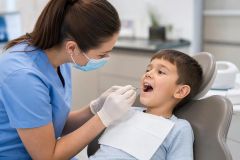
Pediatric dental treatments for multiple cavities in baby teeth help protect your child's oral health with fillings, crowns, and preventive care.
Get a free consultation and talk through symptoms, treatment options, and possible care paths with our coordination team.
Get Free Consultation
Learn how Silver Diamine Fluoride (SDF) offers a safe, non-invasive way to manage tooth decay and support dental health effectively.

Learn how the best pediatric dental treatment is selected based on your child's needs, age, and preventive care to ensure healthy smiles.

Preventive dental cleaning for children is essential to maintain healthy teeth and gums. Learn about its process, benefits, and how to prepare your child.

Explore key pediatric dental treatments like fluoride and sealants that help prevent cavities and support your child's oral health early.

Explore the importance and process of preventive dental cleaning for children to maintain healthy teeth and gums from early age.

Explore the different types of pediatric dental treatments to keep your child's smile healthy. Learn about routine care, specialized procedures, and emergency dental care for kids.
Pediatric dental treatments focus on preventing, diagnosing, and treating oral health conditions in infants, children, and adolescents. Pediatric dentistry differs from adult dental care because children’s teeth, jaws, oral habits, communication abilities, and emotional needs continue to develop.
Treatment may involve routine preventive care, fillings, dental crowns, pulp therapy, tooth extraction, space maintainers, dental trauma treatment, early orthodontic intervention, or care under sedation or general anesthesia. The most appropriate approach depends on the child’s age, dental development, medical history, level of cooperation, symptoms, and risk of future oral disease.
Primary teeth, commonly known as baby teeth, play an important role in chewing, speech, facial development, and maintaining space for permanent teeth. Although primary teeth eventually fall out, untreated decay or infection can cause pain, difficulty eating, sleep disturbance, school absence, facial swelling, and damage to developing permanent teeth.
International families considering pediatric dental treatment abroad should carefully evaluate whether travel is medically appropriate for the child. Routine or minor dental procedures can often be completed close to home, where follow-up care is easier. Treatment abroad may be considered when specialist expertise, comprehensive rehabilitation, complex surgery, or coordinated care is not readily available locally.
The child’s safety, comfort, continuity of care, and ability to receive urgent follow-up should take priority over package price or travel convenience.
A pediatric dental examination evaluates the teeth, gums, bite, jaw development, oral tissues, and dental habits. The dentist may also assess speech-related concerns, breathing patterns, thumb sucking, pacifier use, tooth grinding, and the eruption of permanent teeth.
The examination may include a review of the child’s medical history, diet, fluoride exposure, brushing habits, previous dental experiences, allergies, medications, and family history of oral disease.
Dental X-rays may be recommended when they are expected to provide information that cannot be obtained through visual examination alone. Imaging can help identify cavities between teeth, missing or extra teeth, developing permanent teeth, dental infections, impacted teeth, bone conditions, and trauma-related damage.
The frequency of examinations depends on the child’s individual risk. Children with frequent cavities, orthodontic appliances, enamel defects, dry mouth, special healthcare needs, or previous dental trauma may require more frequent monitoring.
Professional dental cleaning removes plaque, hardened deposits, and surface staining from the teeth. It also gives the dental team an opportunity to assess brushing effectiveness and provide age-appropriate oral hygiene guidance.
Cleaning may be recommended as part of routine preventive care or before restorative, orthodontic, or surgical treatment. Children with active gum inflammation may experience temporary bleeding or tenderness during cleaning.
The dentist or dental hygienist may demonstrate brushing techniques, recommend interdental cleaning tools, and advise parents about supervising home care.
Professional cleaning supports oral health but does not replace daily brushing with fluoride toothpaste and appropriate dietary habits.
Fluoride treatment helps strengthen tooth enamel and can reduce the risk of tooth decay. It may be applied as a varnish, gel, foam, or other professionally supervised product.
The need for fluoride treatment depends on the child’s age, cavity history, diet, enamel condition, brushing habits, local water supply, and overall risk of decay.
Professional fluoride applications are usually completed quickly and do not involve drilling or anesthesia. Parents may receive instructions about eating, drinking, or brushing after treatment.
Fluoride is most effective when combined with regular brushing, reduced frequency of sugary foods and drinks, and routine dental care.
Dental sealants are thin protective coatings applied to the grooves of back teeth. These grooves can trap food and bacteria and may be difficult for children to clean thoroughly.
Sealants are commonly placed on newly erupted permanent molars, although they may also be considered for selected primary teeth or other high-risk surfaces.
The tooth is cleaned, prepared, and covered with the sealant material. The procedure is generally painless and does not require local anesthesia.
Sealants can reduce cavity risk but may wear or become damaged. They should be checked during routine dental examinations and repaired or replaced when necessary.
Dental fillings repair teeth affected by cavities, minor fractures, or other limited structural damage. The dentist removes unhealthy tooth tissue, cleans the area, and restores the tooth with an appropriate material.
Common materials include tooth-colored composite resin, glass ionomer, resin-modified glass ionomer, and other pediatric restorative materials. The choice depends on cavity size, tooth location, moisture control, child cooperation, and how long the primary tooth is expected to remain in the mouth.
Small cavities may be treated with minimally invasive techniques. Larger cavities may require a crown or pulp treatment instead of a standard filling.
Local anesthesia may be used to keep the child comfortable. After treatment, parents should supervise the child until numbness wears off because young patients may accidentally bite their lips, cheeks, or tongue.
Dental crowns cover and protect teeth that are too damaged for a filling. They may be recommended for large cavities, fractured teeth, enamel defects, teeth treated with pulp therapy, or children with a high risk of recurrent decay.
Stainless steel crowns are commonly used on primary back teeth because they provide full coverage and durability. Tooth-colored crown options may include zirconia, composite-based, or other aesthetic materials.
Stainless steel crowns are usually less expensive and may require less technique-sensitive placement. Tooth-colored crowns may offer a more natural appearance but can require greater tooth preparation and may be more costly.
The dentist should explain the advantages, limitations, expected lifespan, and appearance of each option.
A pulpotomy is a pediatric pulp treatment used when decay or trauma has affected the upper portion of the dental pulp but the remaining root tissue may still be healthy.
During the procedure, the affected pulp tissue inside the crown of the tooth is removed. Medication may be placed, and the tooth is usually restored with a protective crown.
Pulpotomy is often performed on primary molars to preserve the tooth until it is naturally replaced by a permanent tooth.
Treatment success depends on accurate diagnosis, control of infection, quality of the final restoration, and follow-up. A treated tooth can still develop pain, swelling, or infection and may eventually require extraction.
A pulpectomy removes infected or damaged pulp tissue from both the crown and root canals of a primary tooth. It may be considered when infection extends deeper than the portion treated by pulpotomy.
The canals are cleaned, disinfected, and filled with a material designed for primary teeth. The tooth is then restored, commonly with a crown.
Permanent teeth in children and teenagers may require conventional root canal treatment following deep decay, trauma, or infection. Young permanent teeth with incomplete root development may need specialized endodontic procedures.
The long-term value of preserving the tooth should be balanced against infection severity, remaining structure, child cooperation, and the expected time before natural tooth loss.
A primary or permanent tooth may require extraction because of severe decay, infection, fracture, advanced gum problems, crowding, failed pulp treatment, or interference with normal eruption.
Primary teeth should not be removed simply because they will eventually fall out. Early extraction can lead to loss of space, movement of neighboring teeth, bite problems, and difficulties with chewing.
Before extraction, the dentist evaluates the tooth, surrounding bone, developing permanent teeth, and expected eruption timeline.
A space maintainer may be recommended after early loss of a primary tooth. Extraction may be performed under local anesthesia, sedation, or general anesthesia depending on treatment complexity and child cooperation.
Space maintainers help preserve room for permanent teeth when a primary tooth is lost earlier than expected.
They may be fixed or removable and can be designed for one missing tooth or several teeth. Common types include band-and-loop appliances, lingual holding arches, distal shoe appliances, and other customized designs.
The need for a space maintainer depends on the child’s age, missing tooth location, stage of dental development, bite, and position of the permanent tooth.
Space maintainers require monitoring because they can loosen, break, trap plaque, or interfere with eruption if left in place too long.
Families receiving a space maintainer abroad should arrange local follow-up to monitor the appliance and remove or adjust it at the correct time.
Dental injuries may include chipped, fractured, displaced, loosened, or knocked-out teeth. Trauma may also affect the gums, lips, jawbone, and developing permanent teeth.
Treatment depends on whether the injured tooth is primary or permanent, the type of damage, time since injury, symptoms, and condition of the surrounding tissues.
A knocked-out permanent tooth may sometimes be reimplanted when urgent care is obtained. A knocked-out primary tooth should generally not be reinserted because of the risk of damaging the developing permanent tooth.
Fractured teeth may require bonding, pulp treatment, a crown, root canal therapy, or extraction.
Some complications appear months or years after the injury. Long-term follow-up may therefore be necessary even when the child has no immediate pain.
Emergency dental trauma is usually best treated as close as possible to the location where the injury occurs rather than through planned international travel.
Early orthodontic treatment evaluates and, when necessary, manages problems affecting tooth eruption, jaw growth, spacing, crowding, and bite development.
Treatment may be considered for severe crossbite, jaw growth differences, prolonged oral habits, premature tooth loss, impacted teeth, or insufficient space for permanent teeth.
Possible appliances include expanders, functional appliances, space maintainers, partial braces, and habit-breaking appliances.
Not every orthodontic concern requires immediate treatment. Some conditions are best monitored until more permanent teeth have erupted.
International orthodontic treatment requires careful planning because progress must be monitored over many months or years. Families should establish whether a qualified orthodontist near home can provide follow-up.
Prolonged thumb sucking, finger sucking, pacifier use, tongue thrusting, or other oral habits may affect tooth position and jaw development.
Behavioral guidance is generally considered before appliance-based treatment. When the habit continues and causes dental changes, a fixed or removable appliance may be recommended.
The child’s emotional readiness and cooperation are important. Treatment should not be punitive or used without appropriate communication and parental support.
Follow-up is required to monitor oral hygiene, appliance condition, and changes in the bite.
Children may develop enamel defects such as hypomineralization, hypoplasia, or developmental discoloration. Affected teeth may be sensitive, weak, or more vulnerable to decay and fracture.
Treatment may include fluoride, desensitizing products, sealants, bonding, fillings, crowns, or other protective restorations.
Molar-incisor hypomineralization can affect permanent molars and front teeth. Management depends on severity, symptoms, eruption stage, and long-term prognosis.
Some cosmetic treatment may be delayed until dental development is more complete.
Sedation may help children who experience significant anxiety, have difficulty cooperating, require lengthy treatment, or have additional healthcare needs.
Sedation options may include inhalation sedation, oral medication, intravenous sedation, or other professionally supervised methods. The appropriate technique depends on the child’s age, health, anxiety level, procedure, and local regulations.
Sedation does not replace local anesthesia when pain control is required. It is intended to reduce anxiety, awareness, movement, or distress.
The provider should explain fasting requirements, medication instructions, monitoring, recovery, and possible risks.
Families travelling abroad should verify the qualifications of the sedation provider, facility standards, emergency equipment, and postoperative monitoring arrangements.
General anesthesia may be considered when a child requires extensive dental rehabilitation, cannot cooperate safely, has severe anxiety, has certain medical or developmental conditions, or needs complex surgery.
Under general anesthesia, the child is unconscious and treatment may be completed during one operating session.
General anesthesia can reduce the number of stressful appointments, but it introduces additional medical risks and should be recommended only after appropriate assessment.
Treatment should be performed in a properly equipped hospital or accredited facility with qualified anesthesia professionals and pediatric monitoring capabilities.
Families should understand which procedures will be completed, whether any treatment decisions may change during anesthesia, and how informed consent will be managed.
Children with physical, developmental, sensory, behavioral, or medical conditions may require an individualized dental approach.
The dental team may adapt communication, appointment length, environment, positioning, preventive care, sedation, and treatment planning.
Coordination with pediatricians, medical specialists, caregivers, and school or community services may be appropriate.
International travel can create additional challenges involving medication schedules, accessibility, communication, sensory stress, and emergency care. Families should evaluate whether the destination clinic can safely meet the child’s specific needs.
Children may require oral surgery for impacted teeth, extra teeth, cysts, abnormal tissue, fractures, or orthodontic treatment.
Supernumerary teeth may block eruption or disturb alignment. Impacted permanent teeth may need surgical exposure and orthodontic guidance.
Surgical treatment should consider the position of developing teeth, facial growth, nerve structures, and the child’s ability to tolerate postoperative care.
Complex surgery may require specialist pediatric and maxillofacial collaboration.
The appropriate treatment should relieve pain, control infection, preserve healthy tooth structure, support dental development, and minimize emotional distress.
Parents should receive a clear explanation of all reasonable options, including the consequences of delaying or declining treatment.
Treatment should not be selected only because it can be completed during a dental tourism package. Continuity of care is especially important for growing children because teeth erupt, jaws develop, and appliances require ongoing adjustment.
For international families, the safest plan includes accurate diagnosis, qualified pediatric care, age-appropriate communication, informed parental consent, and confirmed follow-up arrangements after returning home.