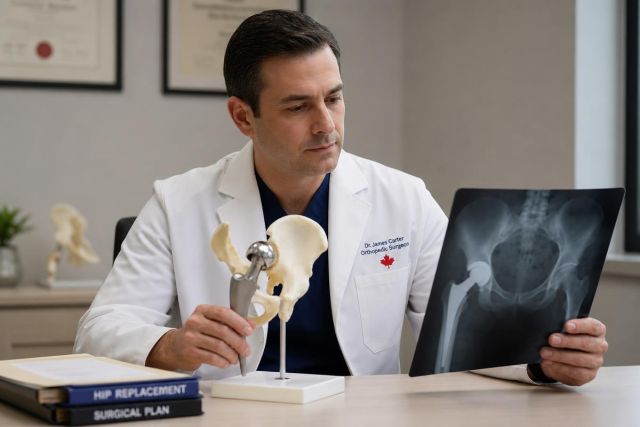
Quick Answer
The operative report is more important than a discharge summary alone for Canadian hip replacement patients returning from Turkey because it contains detailed surgical information essential for safe and effective follow-up care. It includes specifics about the surgical procedure, implants, intraoperative findings, and complications that discharge summaries typically omit.
- Operative reports provide comprehensive details about the surgery, including approach, implant type, and intraoperative findings, which are crucial for ongoing care.
- Discharge summaries offer only a brief overview of hospital stay and postoperative instructions, often lacking critical surgical details.
- Accurate operative reports ensure continuity of care and help Canadian healthcare providers tailor rehabilitation and manage potential complications.
- Patients must proactively request their complete operative report from Turkish hospitals to secure detailed documentation.
- Incomplete records, especially missing operative reports, can lead to delays, mismanagement, and increased risks in follow-up care.
- Operative reports facilitate communication between the original surgical team abroad and Canadian providers, supporting patient safety.
- Patients have the right to access their medical records internationally but should follow formal request procedures and verify authenticity.
Canadian Hip Replacement Patients Returning From Turkey: Why Is the Operative Report More Important Than a Discharge Summary Alone?
The operative report is the most essential medical document for Canadian patients returning from hip replacement surgery in Turkey because it contains the detailed account of the surgical procedure needed for safe and effective follow-up care. Unlike discharge summaries, which provide a brief overview of hospital stay and postoperative instructions, operative reports include critical technical details about the surgery, implants used, intraoperative findings, and any complications encountered. This level of detail ensures continuity of care and helps Canadian healthcare providers make informed decisions about rehabilitation and any future interventions.
Patients who undergo hip replacement abroad face unique challenges in transferring their medical information accurately to their home healthcare teams. The operative report forms the foundation of your medical record by documenting exactly what was done during surgery. Without it, your Canadian doctors may lack vital information, which could compromise your ongoing treatment and safety. Understanding why the operative report matters more than a discharge summary alone empowers you to advocate for comprehensive documentation and smoother coordination of care once you return home.
Ensuring you obtain a complete operative report from your Turkish hospital requires awareness of what information it should include and how to request it properly. This article explores the reasons why detailed operative reports are critical, the shortcomings of discharge summaries, what to look for in your surgical records, and how to secure accurate documentation for your continued recovery in Canada.
Find Out If Hip Replacement Surgery May Be Right for You
Answer a few short questions and HealthNode will help you connect with the right orthopedic hip specialist.
Pain and Daily Mobility
This helps us understand how much your hip affects walking, sleep, and daily activities.
Previous Diagnosis or Treatment
Tell us what has already been checked or tried before considering surgery.
Surgery Goals and Timing
Tell us what kind of support you are looking for now.
Contact information
Your information is only used to contact you and is never shared with third parties.
Your request has been received!
Thank you. If you have hip X-ray, MRI, CT scan, diagnosis notes, medication history, injection records, physical therapy notes, or previous surgery records, please keep them ready. A HealthNode consultant will guide you through the next step.
Why Detailed Operative Reports Are Essential for Post-Surgical Care
Detailed operative reports serve as the cornerstone of effective post-surgical care for hip replacement patients returning from international surgery. These reports provide a comprehensive narrative of the surgical procedure, including the approach used, implant types, intraoperative findings, and any challenges or complications encountered during the operation. This information is critical for Canadian healthcare providers who will manage your recovery because it enables them to tailor rehabilitation, monitor for specific risks, and plan any necessary follow-up procedures.
Continuity of care depends on accurate and thorough medical records that reflect the complexity of the surgery performed. Discharge summaries often lack the granularity needed to understand subtle but important aspects of your surgery. Without the operative report, your healthcare team may be forced to make assumptions or rely solely on your clinical symptoms, which can delay appropriate care or lead to suboptimal outcomes.
Operative reports also document surgeon decisions and implant specifications that impact long-term joint function and potential revision surgeries. For Canadian patients returning from Turkey, having this detailed record ensures their medical history is complete and trustworthy. This facilitates communication between your original surgical team abroad and your local care providers, reducing risks and supporting patient safety.
Limitations of Discharge Summaries in International Medical Records
Discharge summaries are designed primarily to summarize a patient's hospital stay and provide instructions for immediate post-discharge care. While useful, these summaries often omit critical surgical details that are vital for ongoing management, especially in the context of complex procedures like hip replacement. When patients return to Canada after surgery in Turkey, relying solely on discharge summaries can leave gaps in medical documentation that hinder effective follow-up.
The discharge summary usually includes information such as hospital admission and discharge dates, a brief description of the surgery, medications prescribed, and general postoperative advice. However, it rarely contains detailed descriptions of the surgical technique, implant models and sizes, blood loss, intraoperative complications, or precise anatomical observations. These omissions can lead to misunderstandings or insufficient data for your Canadian care team.
Discharge summaries may also not follow standardized formats across different countries or hospitals, which can create challenges in interpretation and verification. In international medical tourism scenarios, this variability emphasizes the necessity of obtaining a full operative report to ensure that your medical records are comprehensive and clinically useful for all healthcare providers involved in your care.
Key Elements to Look for in an Effective Operative Report After Hip Replacement
An effective operative report for hip replacement surgery should provide specific, detailed information that enables your Canadian healthcare providers to fully understand your procedure and support your recovery. Key elements to look for include:
The surgical approach used, such as posterior, lateral, or anterior, which affects recovery protocols and precautions. Details about the implant type, brand, size, and fixation method are essential for future imaging interpretation and potential revision surgeries. Documentation of intraoperative findings like bone quality, any unexpected anatomical variations, or complications encountered during surgery. Information about blood loss, anesthesia type, and duration of the procedure. Postoperative instructions or recommendations made by the surgeon regarding weight-bearing status, mobility restrictions, or medications.
Reviewing your operative report for these elements ensures that your Canadian doctors have a clear and comprehensive understanding of your surgery. This level of detail supports patient safety, personalized rehabilitation plans, and better long-term outcomes by preventing miscommunication and enabling proactive care management.
How to Obtain and Verify Your Operative Report from Turkish Hospitals
Requesting and obtaining your operative report from a Turkish hospital requires proactive communication and understanding of your patient rights. Start by formally requesting the complete operative report in writing, either through the hospital’s medical records department or your surgeon’s office. Providing identification and proof of surgery may be necessary to verify your identity and protect patient confidentiality.
Keep in mind that the process and timelines for releasing medical records can vary between hospitals and regions in Turkey. It is helpful to ask for the report well before your planned return to Canada to allow time for processing and any necessary translations. You may also want to request certified copies or official documents to ensure authenticity and acceptance by Canadian healthcare providers.
Once you receive your operative report, review it carefully for completeness and accuracy. If you notice missing information or unclear sections, contact the hospital to request clarifications or additional documentation. Maintaining open communication with your Canadian doctors can help you identify which details are most critical and guide your follow-up inquiries with the Turkish hospital.
The Impact of Incomplete Records on Follow-Up Care and Outcomes
Incomplete medical records, especially lacking detailed operative reports, can adversely affect the quality and safety of follow-up care for hip replacement patients returning from Turkey. Without a full surgical account, Canadian healthcare providers may not have the necessary information to identify or anticipate postoperative complications such as infections, implant loosening, or nerve injuries.
This uncertainty can lead to delays in diagnosis, inappropriate treatment choices, or unnecessary additional testing. In worst cases, missing operative details may compromise surgical planning for revision procedures, increasing the risk of poor outcomes or prolonged recovery.
Patient safety depends on accurate and comprehensive records that provide a clear picture of the surgical history. Having only a discharge summary may give an incomplete view, thus elevating risks and reducing confidence in clinical decisions. Ensuring you have your operative report supports timely, well-informed care that optimizes your recovery and long-term joint function.
Frequently Asked Questions
Q: Why is the operative report more detailed than the discharge summary?
A: The operative report provides a comprehensive account of the surgical procedure, including technical details, findings, and intraoperative decisions, which are often summarized briefly in the discharge summary.
Q: Can I get my operative report from my Turkish hospital after returning to Canada?
Find Out If Hip Replacement Surgery May Be Right for You
Answer a few short questions and HealthNode will help you connect with the right orthopedic hip specialist.
Pain and Daily Mobility
This helps us understand how much your hip affects walking, sleep, and daily activities.
Previous Diagnosis or Treatment
Tell us what has already been checked or tried before considering surgery.
Surgery Goals and Timing
Tell us what kind of support you are looking for now.
Contact information
Your information is only used to contact you and is never shared with third parties.
Your request has been received!
Thank you. If you have hip X-ray, MRI, CT scan, diagnosis notes, medication history, injection records, physical therapy notes, or previous surgery records, please keep them ready. A HealthNode consultant will guide you through the next step.
A: Yes, patients have the right to request their medical records, including operative reports, from the hospital where the surgery was performed. It may require formal requests and verification of identity.
Q: What specific information should I check in my operative report for my hip replacement?
A: You should verify details such as the type of implant used, surgical approach, intraoperative findings, any complications, and postoperative instructions.
Q: How does having a detailed operative report benefit my ongoing care in Canada?
A: It ensures your Canadian healthcare providers have complete and accurate information about your surgery, which is crucial for follow-up, managing any complications, and future treatments.
Q: What risks do I face if I only have a discharge summary for my surgery?
A: Relying solely on a discharge summary may lead to incomplete understanding of the procedure, potential mismanagement, or missed complications, affecting your recovery and long-term outcomes.
Q: Are there any legal considerations when requesting my operative report internationally?
A: Patients generally have the right to access their medical records, but procedures may vary by country and hospital policies. It’s advisable to follow official request processes and seek assistance if needed.
The information provided is for educational purposes only and does not constitute medical advice. Always consult with a healthcare professional for medical guidance specific to your situation.