Quick Answer
Thigh muscle weakness can persist after knee replacement as pain, swelling, reduced activity, and less efficient muscle activation affect the quadriceps while strength rebuilds. Recovery varies, and weakness alone does not mean the implant has failed.
- Quadriceps strength may take months to rebuild, and there is no single recovery timetable for everyone.
- Pain and swelling can temporarily make it harder to activate the thigh muscles fully.
- Pre-surgery weakness, stiffness, reduced movement, and other health or practical factors can affect recovery.
- Follow the exercise plan from your surgeon or physical therapist rather than copying another person's routine or increasing activity sharply.
- Contact your care team if weakness is worsening, not gradually improving, or making everyday movement less safe.
- Seek prompt medical advice for sudden weakness, new inability to bear weight, significant swelling, fever, or an increasingly painful, red, or warm knee.
- New calf pain or swelling needs urgent discussion with a clinician, while sudden shortness of breath or chest pain calls for emergency care.
Why Can Thigh Muscle Weakness Persist After Knee Replacement?
Thigh muscle weakness after knee replacement can persist while your knee heals, and it does not automatically mean the implant has failed. Pain, swelling, reduced use of the leg, and changes in how the joint communicates with the muscles can all make the quadriceps feel slow to respond. Strength often improves gradually, but the pace varies from person to person.
The quadriceps are the muscles at the front of your thigh. They help straighten your knee, control your leg as you stand, and support activities such as walking or climbing stairs. After surgery, discomfort and swelling may make it harder to contract these muscles fully. If your leg was already weak or stiff before surgery, rebuilding strength may also take extra work. A few good days followed by a more difficult one can happen, so progress is not always a straight line.
Your rehabilitation plan should reflect your operation, symptoms, health, and ability to move safely. Follow the instructions from your surgeon and physical therapist rather than copying exercises from someone else. If weakness is worsening, stopping you from bearing weight, or accompanied by concerning symptoms, contact your care team. If you are recovering far from your surgical team, arrange a clear handover of your exercise plan and medical records to a local clinician, using an interpreter if needed.
Get Support for Joint Pain and Osteoarthritis
Answer a few short questions and HealthNode will help you connect with the right orthopedics, physical therapy, or joint care specialist.
Pain and Daily Life
This helps us understand how much the joint problem affects your movement and daily activities.
Previous Diagnosis or Treatment
Tell us what has already been checked or tried so we can route you to the right care option.
Contact information
Your information is only used to contact you and is never shared with third parties.
Your request has been received!
Thank you. If you have X-ray, MRI, blood test results, previous diagnosis notes, medication history, injection records, physical therapy notes, or previous surgery records, please keep them ready. A HealthNode consultant will guide you through the next step.
### Why the Thigh Can Stay Weak After Knee Replacement
Pain and swelling can temporarily limit how strongly your quadriceps contract. The muscles may be present and structurally intact, but the body can reduce their activation when the joint is sore or swollen. Clinicians sometimes call this arthrogenic muscle inhibition. In plain language, signals between the knee and the muscle are not working as efficiently as usual.
Less movement before and after surgery can also reduce muscle strength and size. If arthritis made walking or bending difficult before the operation, your thigh may have lost conditioning already. Then surgery, rest, and cautious movement can add to that weakness. This is one reason two people with similar operations may have different recovery experiences.
A weak or shaky thigh alone does not prove that the implant has failed. Your care team considers the whole picture, including pain, swelling, movement, stability, and how your function is changing. Other symptoms may need assessment, but weakness is often part of the recovery process rather than a diagnosis by itself.
Numbness near the incision can occur separately from muscle weakness and may affect how the area feels. If you are also concerned about altered sensation, see information on numbness around the knee replacement scar and raise any new or changing symptoms with your clinician.
### How Long Quadriceps Weakness May Affect Recovery
Quadriceps strength can take months to rebuild after knee replacement, and there is no single timetable that fits everyone. Early recovery often focuses on getting the knee moving, managing symptoms, and regaining basic tasks. Strength and confidence may continue to improve as you practise walking and progressively harder activities with guidance.
Your starting point matters. Someone who had stronger thigh muscles and could move well before surgery may progress differently from someone who had pain, stiffness, or weakness for a long time. Overall health, pain control, swelling, sleep, and how regularly you can complete the prescribed rehabilitation may also affect progress.
Recovery can be uneven. You might walk farther one week, then feel more tired or stiff after increasing activity. A temporary setback does not automatically mean that healing has gone wrong, but a sustained decline or new symptom deserves attention. Track practical changes, such as getting up from a chair or managing a step, instead of judging progress only by how your knee feels on one day.
If your recovery is taking longer than you expected, compare your progress with the goals set by your own clinician, not a fixed online milestone. Ask what changes are reasonable for your situation and what symptoms should prompt a call. When in-person therapy is difficult to access, ask whether tele-rehabilitation could support your existing plan, rather than replacing clinical assessment when it is needed.
### Rehabilitation That Builds Thigh Strength Safely
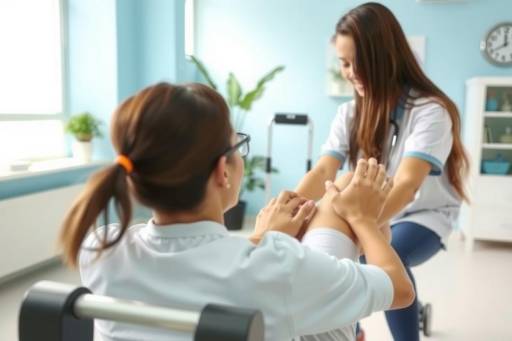
Physical therapy helps you practise muscle activation, knee movement, balance, and everyday tasks in a planned way. Your therapist may start with gentle quadriceps contractions or leg movements, then progress to functional exercises such as standing or stepping when appropriate. The right choices and level of effort depend on your healing, comfort, balance, and the instructions from your surgical team.
Use your own written plan and confirm that you understand how often to exercise, how many repetitions to do, and what level of discomfort is acceptable. Exercises should not be copied from another patient or increased sharply because a session felt easy. If you have had surgery abroad or moved home during recovery, share your discharge instructions and therapy notes with the clinician continuing your care. Request language support if any instructions are unclear.
Pay attention to how your knee responds during the activity and afterward. If pain or swelling clearly worsens, reduce or pause the activity as instructed and contact your therapist or surgical team for advice. Do not push through severe pain or a sudden change in your ability to use the leg. A therapist can adjust the plan rather than asking you to abandon strengthening altogether.
For some people, a mixture of in-person and remote support is practical. Tele-rehabilitation may help with exercise guidance and follow-up, but it is not a substitute for an examination if new symptoms require one. Ask your care team which exercises are suitable for your current stage and how to progress them safely.
### When Persistent Weakness Needs Medical Assessment
Contact your surgeon, doctor, or physical therapist if weakness is not gradually improving, is getting worse, or is making everyday movement less safe. They may check quadriceps strength, knee movement, pain, swelling, walking, and how your recovery compares with your individual plan. Depending on your symptoms, they can decide whether your exercises need adjustment or whether further assessment is appropriate.
Seek prompt medical advice for a sudden increase in weakness, a new inability to bear weight, or significant new swelling. Fever or a knee that becomes increasingly painful, red, or warm also needs timely attention. These symptoms do not identify a cause on their own, but they should not be dismissed as ordinary muscle weakness.
New calf pain or swelling should be discussed urgently with a clinician. Sudden shortness of breath or chest pain can be an emergency, so seek emergency care rather than waiting for a routine follow-up. Use the emergency service available where you are, especially if you are travelling or away from your usual hospital.
If you are receiving care in another country or have returned home after surgery, keep a copy of your operation and discharge information, medication list, and rehabilitation instructions. Share them with the clinician assessing you. A language barrier should not prevent you from explaining when symptoms began, what has changed, and whether you can walk or put weight through the leg.
### Factors That Can Slow Strength Recovery
Weakness present before surgery can take time to address because your muscles may have been underused while the knee was painful or stiff. Other health conditions, reduced balance, or problems affecting nerves can also influence how movement feels and what exercise is suitable. Tell your care team about your health history and any change in sensation or control, rather than assuming every symptom comes from the knee itself.
Ongoing pain and swelling can make it harder to activate the quadriceps or complete rehabilitation consistently. Poor sleep, low appetite, or difficulty getting enough nourishing food may also make recovery more demanding. These factors do not mean that you have failed at rehabilitation. They are useful details for your clinician when deciding whether your plan, symptom support, or follow-up needs to change.
Practical barriers matter too. You may have difficulty travelling to therapy, understanding written instructions, arranging help at home, or keeping up with exercises while recovering away from your regular care team. Explain which part is difficult. A clinician may be able to clarify instructions, review safety, or discuss accessible ways to continue the prescribed program.
Do not change medication, use extra equipment, or substantially increase or stop exercises without appropriate guidance. If swelling behind the knee is a concern, describe its location and timing because it may need a separate assessment from thigh weakness. You can also read about a Baker’s cyst after knee replacement to learn why swelling in that area may be considered separately.
Get Support for Joint Pain and Osteoarthritis
Answer a few short questions and HealthNode will help you connect with the right orthopedics, physical therapy, or joint care specialist.
Pain and Daily Life
This helps us understand how much the joint problem affects your movement and daily activities.
Previous Diagnosis or Treatment
Tell us what has already been checked or tried so we can route you to the right care option.
Contact information
Your information is only used to contact you and is never shared with third parties.
Your request has been received!
Thank you. If you have X-ray, MRI, blood test results, previous diagnosis notes, medication history, injection records, physical therapy notes, or previous surgery records, please keep them ready. A HealthNode consultant will guide you through the next step.
Frequently Asked Questions
Q: Is thigh weakness normal after knee replacement surgery?
A: Some thigh weakness is common during recovery because pain, swelling, and reduced activity can affect quadriceps activation. It should be considered alongside how your movement and symptoms are changing. Contact your care team if weakness suddenly worsens, limits safe walking, or comes with other concerning symptoms.
Q: How long can quadriceps weakness last after knee replacement?
A: Strength may take months to rebuild, but recovery varies with your health, starting strength, pain, swelling, and rehabilitation. There is no guaranteed date by which everyone should feel strong. Ask your clinician how your progress compares with your own recovery goals.
Q: Can physical therapy improve thigh weakness after knee replacement?
A: A clinician-guided rehabilitation plan can help you practise muscle activation and gradually build strength for daily activities. Your exercises should match your healing and balance, so do not adopt another person's routine. If the plan causes worsening pain or swelling, ask your therapist how to adjust it.
Q: Should I exercise if my knee swells after activity?
A: Some changes in symptoms can occur as activity increases, but worsening swelling or pain may mean your plan needs review. Follow the advice you were given about activity and rest, and avoid pushing through severe pain. Contact your therapist or surgical team if the reaction persists, becomes significant, or affects your ability to walk.
Q: Could persistent thigh weakness mean my knee implant failed?
A: Weakness by itself does not establish that an implant has failed. A clinician may assess strength, movement, pain, swelling, walking function, and your recovery pattern to decide what is happening. Seek prompt advice for sudden worsening, new inability to bear weight, significant swelling, fever, or new calf symptoms.
The information provided is for educational purposes only and does not constitute medical advice. Always consult with a healthcare professional for medical guidance specific to your situation.