Quick Answer
LASIK eye surgery changes the cornea's shape and thickness, which can affect the interpretation of future eye tests. Informing your eye care professional about your LASIK history is essential for accurate test result interpretation.
- LASIK reshapes and thins the cornea by removing microscopic layers of tissue to correct vision.
- Post-LASIK, eye tests that measure corneal shape, thickness, or pressure may yield different results than before surgery.
- Corneal topography and pachymetry readings are notably affected due to changes in corneal curvature and thickness.
- Intraocular pressure measurements can be falsely low after LASIK, potentially complicating glaucoma diagnosis.
- Disclosing your LASIK history to eye care providers helps avoid misdiagnosis and ensures proper interpretation of test results.
- Eye care professionals may use modified testing techniques or alternative instruments for accurate assessments after LASIK.
- Regular monitoring and communication with your eye doctor are important to track vision stability and eye health post-surgery.
Can LASIK Eye Surgery Affect How Future Eye Tests Are Interpreted?
LASIK eye surgery reshapes the cornea to correct vision, which directly influences how future eye tests are interpreted. This means that some standard eye examinations may yield results different from those expected before surgery. Understanding these changes helps you and your eye care professional accurately monitor your eye health and vision over time.
The cornea is the clear, curved front surface of your eye responsible for focusing light. LASIK modifies this curvature by removing microscopic layers of corneal tissue, improving focus and reducing refractive errors like nearsightedness or astigmatism. Because the cornea’s shape and thickness are altered, tests that measure these parameters or rely on corneal properties can produce different readings after surgery.
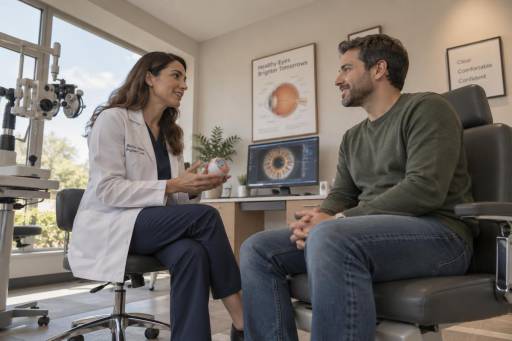
If you have had LASIK, it's important to share this history with your eye doctor. This information enables tailored interpretation of your test results and helps avoid misdiagnosis or unnecessary concern. This article explores how LASIK changes your eye's anatomy, affects common eye tests, potential diagnostic challenges, and strategies to ensure precise eye care post-surgery.
Get expert support for your treatment
Let our coordination team prepare a personalized plan for you.
Contact information
Your information is only used to contact you and is never shared with third parties.
Your request has been received!
Your request has been received! Our coordination team will contact you as soon as possible.
How LASIK Eye Surgery Changes the Cornea’s Shape and Vision
LASIK eye surgery precisely reshapes the cornea by removing microscopic layers of tissue to correct refractive errors. This alteration mainly flattens or smooths the cornea’s curvature, allowing light to focus correctly on the retina. Because the cornea’s shape is fundamental to focusing vision, these changes improve clarity but also modify the cornea’s natural anatomy.
The reshaping process affects not only the corneal curvature but also its thickness and biomechanical properties. The central corneal thickness decreases due to tissue removal, which can influence measurements taken in future eye exams. Since many eye tests depend on corneal shape and thickness, the post-LASIK cornea behaves differently than an unoperated eye.
These anatomical changes are permanent, meaning that tests like corneal topography or pachymetry will detect a different corneal profile than before surgery. Vision correction achieved through LASIK typically stabilizes within weeks, but the altered corneal geometry must always be considered when interpreting subsequent eye examinations.
Common Eye Tests and How LASIK Influences Their Results
Several standard eye tests assess vision quality and the cornea’s physical characteristics. After LASIK, results from these tests can differ due to the surgery’s impact on corneal shape and thickness.
Refraction tests, which determine your prescription for glasses or contacts, may show different values after LASIK. Since LASIK corrects the refractive error by reshaping the cornea, your prescription might be reduced or eliminated, but subtle fluctuations can occur as the eye stabilizes. Eye care professionals must consider your surgical history to avoid confusing these changes with new vision problems.
Corneal topography maps the surface curvature of the cornea. Post-LASIK, topography patterns change significantly, reflecting the new shape. Interpreting these maps requires understanding the typical post-surgical alterations to avoid misinterpreting them as corneal disease.
Pachymetry measures corneal thickness. Because LASIK thins the cornea centrally, pachymetry readings will be lower after surgery. This affects glaucoma risk assessments and other diagnoses that rely on corneal thickness. Eye doctors adjust their evaluation methods accordingly.
These tests remain valuable but need contextual interpretation after LASIK to provide an accurate picture of your eye health.
Potential Challenges in Diagnosing Future Eye Conditions After LASIK
Diagnosing eye conditions after LASIK can be more complex because the surgery alters corneal anatomy and typical test results. For example, detecting glaucoma, keratoconus, or corneal scarring requires careful consideration of post-surgical changes.
One challenge is that intraocular pressure measurements, often used to screen for glaucoma, can be falsely low after LASIK because of corneal thinning. This might mask elevated eye pressure unless corrections or alternative measurement methods are used. Without knowledge of your LASIK history, this could lead to underdiagnosis.
Similarly, corneal irregularities from LASIK can resemble certain diseases on imaging tests, potentially causing confusion. Accurate diagnosis depends heavily on your eye care provider knowing your full medical and surgical history.
Disclosing your LASIK surgery details to every new eye care professional ensures they interpret tests correctly and choose appropriate diagnostic tools. Open communication helps avoid misdiagnosis and supports effective monitoring of your eye health.
Strategies for Accurate Eye Testing and Monitoring After LASIK
Achieving precise eye assessments after LASIK involves specific strategies that both patients and eye care providers can adopt. First, always inform your eye doctor about your LASIK surgery. This knowledge guides the selection and interpretation of diagnostic tests.
Eye care professionals may use modified techniques or alternative instruments better suited for post-LASIK eyes. For example, using corneal-compensated intraocular pressure measurements can provide more accurate glaucoma screening. Similarly, advanced corneal imaging technologies can differentiate surgical changes from pathological conditions.
Regular monitoring is essential to track vision stability and eye health over time. Scheduling periodic comprehensive eye exams helps identify any emerging issues early. Patients should also report any new visual symptoms promptly.
Maintaining clear communication with your eye care team and following their tailored recommendations supports accurate monitoring and preserves your vision health post-LASIK.
When to Consult Your Eye Care Professional About Changes in Eye Test Results
It's important to consult your eye care professional if you notice changes in your vision or if eye test results differ significantly from previous exams. After LASIK, some fluctuations are normal, but persistent or sudden changes warrant professional evaluation.
Symptoms such as blurry vision, halos, glare, or eye discomfort should prompt timely consultation. Likewise, if your eye test results appear inconsistent or unexpected, sharing your concerns enables your doctor to adjust testing methods and consider your surgical history.
Regular follow-up appointments are critical, especially within the first year after LASIK, to monitor healing and vision stability. Even years later, any vision changes should be discussed with your eye care provider to rule out complications or new conditions.
Proactive communication ensures your eye health is accurately assessed and managed, preserving your vision quality over time.
Frequently Asked Questions
Q: Can LASIK affect the accuracy of future eye tests?
Get expert support for your treatment
Let our coordination team prepare a personalized plan for you.
Contact information
Your information is only used to contact you and is never shared with third parties.
Your request has been received!
Your request has been received! Our coordination team will contact you as soon as possible.
A: LASIK changes the cornea’s shape and thickness, which can influence the results of certain eye tests. This may cause differences compared to pre-surgery test outcomes, but most tests remain reliable when your surgical history is known.
Q: Will my eye test results be unreliable after LASIK?
A: Most eye tests continue to provide accurate information after LASIK. However, some measurements, especially those involving corneal shape or pressure, may be affected. Informing your eye care provider about your LASIK history helps ensure correct interpretation.
Q: How does LASIK impact tests like corneal topography?
A: LASIK alters the corneal surface, changing the patterns seen on corneal topography maps. Eye specialists consider these surgical changes when analyzing topography to distinguish them from disease.
Q: Should I inform my eye doctor if I have had LASIK?
A: Yes, always tell your eye doctor about your LASIK surgery. This allows them to interpret test results accurately and choose the best methods for monitoring your eye health.
Q: Are there specific tests that are more affected by LASIK?
A: Tests measuring corneal shape and thickness, such as corneal topography and pachymetry, are most affected after LASIK. Pressure measurements can also be influenced due to changes in corneal thickness.
Q: What should I do if my eye test results seem inconsistent after LASIK?
A: Discuss any concerns about inconsistent test results with your eye care professional. They can consider your LASIK surgery and may perform additional assessments to clarify your eye health status.
The information provided is for educational purposes only and does not constitute medical advice. Always consult with a healthcare professional for medical guidance specific to your situation.