Quick Answer
LASIK eye surgery can be suitable for people over 50 if they have stable vision and healthy eyes without significant age-related conditions like cataracts or severe dry eye. A thorough eye health evaluation is essential to determine candidacy.
- Age alone does not disqualify someone over 50 from LASIK surgery if their vision prescription is stable for at least 12 months.
- Common age-related eye conditions such as cataracts, presbyopia, and dry eye syndrome can affect LASIK suitability and outcomes.
- Traditional LASIK corrects distance vision but does not address presbyopia, so reading glasses may still be needed after surgery.
- Advancements like customized and bladeless LASIK have improved safety and effectiveness for older patients.
- A comprehensive preoperative evaluation includes assessing corneal thickness, tear production, and screening for eye diseases.
- Alternative vision correction options like PRK or implantable lenses may be recommended if LASIK is not suitable.
- Regular eye exams are important for monitoring eye health and ensuring LASIK candidacy in people over 50.
Is LASIK Eye Surgery Suitable For People Over 50?
LASIK eye surgery can be a suitable option for many individuals over 50, provided they have stable vision and no significant age-related eye diseases that could affect outcomes. Age alone does not automatically disqualify you from LASIK, but your overall eye health and specific conditions must be carefully evaluated by an eye care professional.
As we age, changes in the eyes such as presbyopia, cataracts, and dry eye syndrome become more common and can influence whether LASIK is advisable or if alternative treatments may be better. Ensuring that your prescription has been stable for at least a year is also crucial.
Understanding how age impacts LASIK candidacy helps you make an informed decision. This includes knowing which eye conditions might affect your suitability and how modern advancements in LASIK technology have expanded options for older patients. With a comprehensive eye exam and thorough consultation, you can determine if LASIK aligns with your vision goals and health status.
Get expert support for your treatment
Let our coordination team prepare a personalized plan for you.
Contact information
Your information is only used to contact you and is never shared with third parties.
Your request has been received!
Your request has been received! Our coordination team will contact you as soon as possible.
Assessing Age and Eye Health for LASIK Candidacy in Your 50s and Beyond
Your age itself is not a barrier to LASIK surgery if your eyes are otherwise healthy and your vision prescription has been stable. Stability means your eyeglass or contact lens prescription has not changed significantly for at least 12 months. This is important because LASIK reshapes the cornea to correct vision based on your current prescription.
However, aging increases the likelihood of eye conditions that can impact LASIK outcomes. Conditions such as cataracts or dry eyes may require treatment before considering surgery. Additionally, presbyopia, the gradual loss of near focusing ability common after age 40, is not corrected by traditional LASIK.
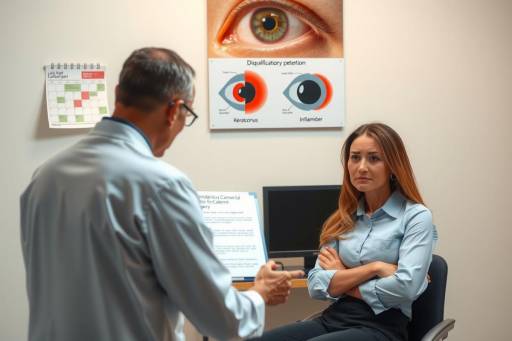
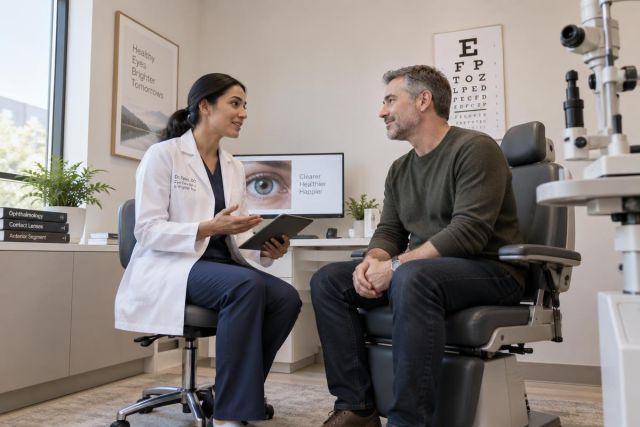
Eye health evaluation for those over 50 includes screening for these conditions and assessing corneal thickness and overall ocular surface health. If your eyes are healthy and your vision stable, you may be a good candidate. But candidacy depends on a careful, personalized assessment rather than age alone.
Common Eye Conditions in Older Adults That Affect LASIK Suitability
Several age-related eye conditions can influence whether LASIK is appropriate for you. Cataracts, characterized by clouding of the eye’s natural lens, typically develop after age 50 and can cause vision changes that LASIK does not correct. If cataracts are present, cataract surgery may be recommended instead of or before LASIK.
Presbyopia is another common condition where the eye loses its ability to focus on nearby objects. Traditional LASIK improves distance vision but does not restore near vision, so many patients over 50 still need reading glasses after surgery. Some newer laser techniques or lens implants aim to address presbyopia directly.
Dry eye syndrome is prevalent in older adults and can worsen after LASIK. Managing dry eyes before and after surgery is essential to minimize discomfort and optimize healing. Your surgeon will assess tear production and eye surface condition during evaluation.
These conditions do not necessarily exclude you from LASIK but require thorough evaluation and sometimes additional treatment to ensure the best possible outcome.
Advancements in LASIK Technology and Techniques for Older Patients
Recent technological improvements have made LASIK safer and more effective for patients over 50. Customized LASIK procedures use detailed mapping of your eye's surface to tailor the laser treatment, improving precision and visual outcomes even in the presence of mild irregularities.
Bladeless LASIK, which uses femtosecond lasers to create the corneal flap, reduces risks and enhances recovery. These advances allow surgeons to treat a wider range of prescriptions and eye conditions with greater safety.
Alternative vision correction options such as PRK (photorefractive keratectomy) or implantable lenses are available for patients who may not be ideal LASIK candidates. These options can be particularly helpful if your cornea is thin or if you have other contraindications.
Ongoing research continues to refine techniques to better address presbyopia and other age-related changes, expanding vision correction possibilities for older adults.
Questions to Discuss with Your Eye Care Professional Before Considering LASIK
Before deciding on LASIK, it is important to have a thorough consultation with an ophthalmologist or optometrist who will evaluate your eye health and discuss your vision goals. Ask if your prescription has been stable and if any age-related conditions like cataracts or dry eye could affect surgery success.
Inquire about the types of LASIK technology available and whether customized or bladeless techniques would benefit your eyes. Discuss alternative procedures if LASIK is not recommended.
You should also clarify what results you can realistically expect, including how LASIK may or may not address presbyopia or the need for reading glasses. Understanding the risks, benefits, recovery process, and possible need for future vision correction is essential for informed decision-making.
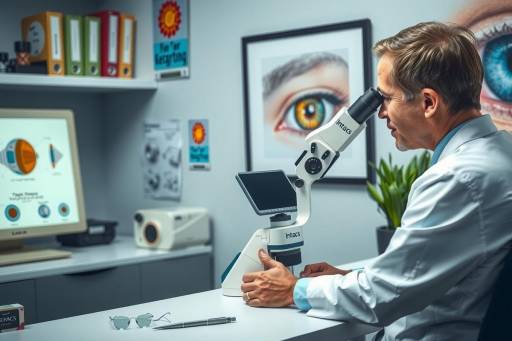
A detailed preoperative evaluation will include corneal thickness measurements, tear film assessment, and screening for any eye diseases. This comprehensive approach helps tailor the best treatment plan for you.
Making an Informed Decision: Is LASIK Right for You at 50 and Beyond?
Deciding on LASIK after 50 requires balancing the potential benefits against the risks and your personal eye health status. If your vision prescription is stable and you do not have significant cataracts or dry eye disease, LASIK can improve your distance vision effectively.
Keep in mind that LASIK does not correct presbyopia, so you may still need reading glasses for near tasks. Some patients choose to combine LASIK with other treatments to manage this.
Advancements in technology have reduced complication risks, but age-related factors mean you should have a thorough eye exam and discuss your medical history openly with your surgeon. Understanding that visual needs and expectations may differ at this stage of life is important.
Ultimately, a personalized approach guided by expert evaluation will help you determine if LASIK aligns with your vision goals and overall health. Where LASIK is unsuitable, alternative options exist to improve your quality of vision safely.
Frequently Asked Questions
Q: At what age is LASIK no longer recommended?
Get expert support for your treatment
Let our coordination team prepare a personalized plan for you.
Contact information
Your information is only used to contact you and is never shared with third parties.
Your request has been received!
Your request has been received! Our coordination team will contact you as soon as possible.
A: LASIK is generally suitable for adults with stable vision, but age-related eye conditions like cataracts or severe dry eye may make it unsafe. There is no strict age cutoff, but your eye care professional will assess your individual health to determine suitability.
Q: Can people over 50 experience presbyopia after LASIK?
A: Yes, presbyopia commonly develops with age and affects near vision even after LASIK. Traditional LASIK primarily corrects distance vision, so reading glasses are often still necessary. Some newer procedures specifically target presbyopia.
Q: Are there risks of complications for older LASIK patients?
A: Age can increase certain risks, such as dry eye or slower healing, but modern LASIK technology has improved safety for older patients. A thorough preoperative evaluation helps identify and minimize individual risks.
Q: Is LASIK a good option for improving vision after 50?
A: LASIK can be effective for people over 50 with stable eye health and no contraindications. It improves distance vision but may not address age-related near vision changes. Consultation with an eye specialist is essential to determine if it is right for you.
Q: What alternatives exist if LASIK isn't suitable for me?
A: Alternatives include PRK, implantable lenses, or other refractive surgeries that may better suit your eye condition. Your eye care provider can guide you to the best option based on your health and vision needs.
Q: How often should I get an eye exam if considering LASIK over 50?
A: Regular eye exams at least once a year are recommended to monitor eye health and detect any changes. Frequent monitoring ensures that any conditions affecting LASIK eligibility are identified early.
The information provided is for educational purposes only and does not constitute medical advice. Always consult with a healthcare professional for medical guidance specific to your situation.