Quick Answer
A LASIK nomogram is a mathematical tool that customizes laser eye surgery by adjusting laser parameters based on individual eye measurements to improve accuracy and safety. It helps surgeons tailor treatment to each patient's unique corneal characteristics and refractive errors for optimized visual outcomes.
- A LASIK nomogram uses detailed preoperative measurements like corneal thickness and curvature to personalize laser settings for each patient.
- Nomograms help reduce the risk of under-correction or over-correction by fine-tuning laser energy, ablation depth, and correction profiles.
- They have evolved through clinical research, technological advances, and surgeon experience to improve precision and safety in LASIK surgery.
- During surgery, nomograms guide real-time adjustments to laser parameters to accommodate individual eye anatomy and movements.
- Using a nomogram improves patient outcomes by enhancing visual clarity, preserving corneal integrity, and reducing complications.
- Nomograms contribute to higher patient satisfaction by providing a personalized treatment approach and setting realistic expectations.
- Future developments aim to integrate AI and biomechanical modeling to further refine nomogram accuracy and customization.
What Is A LASIK Eye Surgery Nomogram And How Is It Used To Fine-Tune Treatment?
A LASIK nomogram is a precise mathematical tool that ophthalmologists use to tailor laser eye surgery treatment for each patient individually. It adjusts the laser parameters based on your unique eye measurements and characteristics to enhance both the accuracy and safety of the procedure. This level of customization helps optimize visual outcomes by reducing the chances of under-correction, where insufficient vision improvement occurs, or over-correction, which can cause new visual distortions.
Tailoring the laser settings through a nomogram is critical because no two eyes are exactly alike. Factors such as corneal thickness, shape, curvature, and the degree and type of refractive error vary widely among individuals. A one-size-fits-all approach could compromise results by failing to account for these important differences. The nomogram guides surgeons in fine-tuning the laser energy, ablation depth, and correction profile specifically for your eyes, ensuring the treatment plan is as precise as possible.
By integrating detailed clinical data from thousands of previous surgeries and ongoing surgical experience, LASIK nomograms represent a significant advancement in refractive surgery precision. They serve as a bridge between standardized treatment protocols and personalized care, helping you achieve clearer vision with greater confidence in your surgery’s success.
Get expert support for your treatment
Let our coordination team prepare a personalized plan for you.
Contact information
Your information is only used to contact you and is never shared with third parties.
Your request has been received!
Your request has been received! Our coordination team will contact you as soon as possible.
Understanding that your surgeon uses a nomogram can also help set realistic expectations about the procedure and recovery. It highlights the personalized nature of your treatment and the efforts made to maximize safety and effectiveness. This individualized approach is a key factor in the high satisfaction rates reported by patients undergoing LASIK today.
Defining the LASIK Nomogram and Its Role in Customizing Eye Surgery
A LASIK nomogram is essentially a customized guide that helps surgeons determine the most effective laser settings for your unique eyes. It functions by incorporating detailed preoperative measurements, including your prescription strength (sphere, cylinder, and axis), corneal thickness, curvature, and other ocular parameters. These inputs feed into the nomogram’s calculations, which then suggest precise adjustments to the laser treatment plan to optimize results.
The primary goal of the nomogram is to enhance the precision of the laser ablation, ensuring that the reshaping of your cornea directly addresses your specific refractive error without removing more tissue than necessary. Since eyes differ widely in their anatomical and optical properties, the nomogram accounts for these variations, enabling a tailored approach rather than a generic correction that might not suit your individual needs.
This customization improves the consistency and predictability of surgical outcomes by reducing errors linked to standard, one-size-fits-all settings. Surgeons rely on the nomogram to translate complex clinical data into actionable laser parameters, balancing safety considerations, such as preserving corneal thickness and minimizing biomechanical impact, with the goal of achieving the best possible visual clarity.
In this way, the nomogram acts as a critical bridge between raw clinical measurements and the finely tuned laser treatment required for your best possible vision. It represents the integration of scientific evidence, surgical expertise, and technological precision, all aimed at delivering personalized, effective, and safe LASIK surgery tailored to your eyes.
How LASIK Nomograms Are Developed and Evolved Over Time
LASIK nomograms have evolved significantly over time through a combination of extensive clinical research, technological innovation, and accumulated surgeon experience. In the early days of laser eye surgery, surgeons relied on fixed correction algorithms that applied uniform treatment parameters to all patients, regardless of individual differences. These initial approaches often failed to account for the wide variability in corneal shape, thickness, and healing responses among patients, which sometimes led to inconsistent outcomes.
As more surgeries were performed and outcomes systematically recorded, clinicians began analyzing large datasets to identify patterns and factors influencing surgical success. This data-driven approach allowed for the refinement of correction algorithms into more sophisticated nomograms that incorporate multiple patient-specific variables. The integration of outcome feedback loops enabled continuous improvement in nomogram accuracy and reliability.
Technological advancements in diagnostic imaging and laser systems have played a critical role in this evolution. Modern devices provide highly precise measurements of corneal topography, pachymetry (thickness), and refractive errors, supplying the detailed input data necessary for accurate nomogram calculations. Enhanced imaging techniques, such as wavefront analysis and optical coherence tomography, further contribute to understanding individual corneal biomechanics and aberrations.
Surgeons also contribute to nomogram development by tailoring recommendations based on their own surgical techniques, patient demographics, and observed outcomes. This iterative process transforms nomograms into dynamic, living tools that adapt and improve with each procedure performed. By combining evidence-based data with expert clinical judgment, nomograms have become essential instruments for optimizing LASIK precision and patient safety.
Today, nomogram development continues to benefit from advances in computational modeling, machine learning, and real-time surgical feedback, promising even greater personalization and effectiveness in refractive surgery planning.
The Process of Using a LASIK Nomogram During Surgery
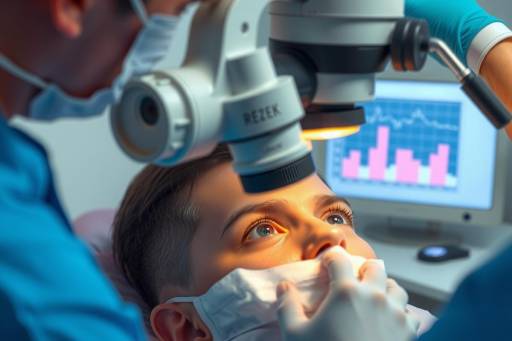
During the LASIK procedure, the surgeon relies on the nomogram to determine the optimal laser parameters tailored specifically to your eyes. Before activating the laser, your preoperative eye measurements, such as corneal thickness, curvature, and refractive error, are input into the nomogram software or referenced from a customized chart. This crucial step ensures that the laser ablation plan accounts for your individual corneal characteristics and refractive needs, rather than applying a generic treatment.
The nomogram guides adjustments to several key parameters, including the laser energy level, the depth and pattern of corneal tissue removal, and the shape and size of the ablation zone. These factors are critical for achieving the intended vision correction while preserving corneal integrity and minimizing the risk of complications. For example, precise control over ablation depth helps maintain sufficient corneal thickness to support structural stability.
During surgery, real-time feedback from the laser system allows the surgeon to monitor the eye’s response and make slight modifications as necessary, guided by the nomogram’s recommendations. This dynamic adjustment capability enhances surgical precision and safety by accommodating subtle variations in your eye anatomy or involuntary movements.
This real-time customization not only reduces the risk of over- or under-correction but also helps prevent complications such as irregular astigmatism or flap-related issues. By applying the nomogram throughout the procedure, surgeons can translate your personalized treatment plan into a successful visual outcome with greater confidence.
Patients can expect that this meticulous approach contributes to faster visual recovery, clearer vision, and a lower likelihood of needing enhancement procedures. The use of a nomogram during surgery exemplifies the modern standard of personalized care in refractive surgery.
Benefits of Using a LASIK Nomogram for Patient Outcomes
Using a LASIK nomogram significantly improves the safety and accuracy of laser eye surgery by providing a personalized treatment plan tailored to the patient’s unique ocular anatomy and refractive needs. By customizing the laser parameters based on precise measurements such as corneal thickness, curvature, and refractive error, the nomogram helps reduce the likelihood of common surgical errors like over-correction or under-correction. These errors can lead to suboptimal visual outcomes or the need for additional enhancement procedures, so minimizing them is crucial for patient satisfaction and long-term success.
This precision in treatment planning translates into clearer vision post-surgery, often achieved more quickly and reliably than with standard protocols. Patients benefit from a reduction in visual disturbances such as glare or halos, which can occur if the laser ablation is not ideally matched to their eye’s characteristics. Additionally, nomogram-guided LASIK enhances patient safety by carefully balancing the amount of corneal tissue removed. Preserving corneal thickness is essential to maintain the eye’s structural stability and reduce the risk of complications like corneal ectasia, a condition where the cornea weakens and bulges outward.
Surgeons use nomograms to optimize tissue preservation without compromising the corrective effect, ensuring that the reshaping of the cornea achieves the desired refractive correction while maintaining biomechanical integrity. This tailored approach is especially important for patients with thinner corneas or higher prescriptions, where the margin for error is smaller.
In addition, patients often report higher satisfaction rates when their surgery is guided by a well-developed nomogram. The improved predictability of outcomes means patients experience clearer vision sooner and with greater confidence. Knowing that the treatment plan is customized to their individual eyes can also reduce anxiety and set realistic expectations about recovery and results. Overall, nomograms contribute to a more personalized and successful LASIK experience, offering both patients and surgeons greater assurance in achieving the desired visual outcomes safely and effectively.
Limitations and Future Developments in LASIK Nomogram Technology
While LASIK nomograms have significantly advanced the precision and safety of laser eye surgery, they are not without limitations. The accuracy and applicability of any nomogram depend heavily on the quality, diversity, and comprehensiveness of the clinical data used to develop it. Variations in patient populations, such as differences in age, ethnicity, corneal biomechanics, and healing responses, can affect how well a nomogram’s recommendations translate to individual cases.
Current nomograms primarily rely on preoperative measurements like corneal thickness, curvature, and refractive error but may not fully capture complex biomechanical properties of the cornea, such as elasticity, viscoelasticity, and individual healing tendencies. These factors can influence how the cornea responds post-surgery, potentially leading to unexpected refractive outcomes or complications.
External factors such as dry eye syndrome, pupil size under different lighting conditions, and ocular surface irregularities can also impact visual quality after LASIK but are challenging to integrate comprehensively into nomogram calculations. These variables may require separate clinical consideration and management alongside the nomogram-guided treatment plan.
To address these challenges, ongoing research is focused on enhancing nomogram technology through improved data collection methods, including larger and more diverse patient datasets. The integration of artificial intelligence and machine learning algorithms holds promise for developing adaptive nomograms that can learn from real-time surgical outcomes and patient feedback, refining predictions continuously.
Future developments may also incorporate personalized biomechanical modeling of the cornea, using advanced imaging and computational simulations to predict individual tissue responses more accurately. Combining real-time intraoperative imaging with predictive algorithms could allow surgeons to adjust laser parameters dynamically during the procedure, further enhancing customization and safety.
Get expert support for your treatment
Let our coordination team prepare a personalized plan for you.
Contact information
Your information is only used to contact you and is never shared with third parties.
Your request has been received!
Your request has been received! Our coordination team will contact you as soon as possible.
These advancements aim to make LASIK nomograms more precise, versatile, and patient-specific, ultimately improving visual outcomes and reducing the risk of complications for a broader range of patients undergoing refractive surgery.
Frequently Asked Questions
Q: What is a LASIK nomogram?
A: A LASIK nomogram is a set of mathematical guidelines used by surgeons to customize laser treatment parameters based on individual eye measurements, aiming to optimize surgical results.
Q: How does a LASIK nomogram improve surgery outcomes?
A: It allows surgeons to adjust laser settings precisely for each patient, reducing the risk of under- or over-correction and enhancing visual clarity.
Q: Are LASIK nomograms different for each patient?
A: Yes, they are personalized based on specific eye measurements and patient data, which helps tailor the treatment to individual needs.
Q: Can the LASIK nomogram change over time?
A: Yes, nomograms are continually refined as new clinical data and technological improvements become available.
Q: Is a LASIK nomogram necessary for all LASIK procedures?
A: Most modern LASIK surgeries utilize some form of a nomogram to enhance accuracy, especially with advanced laser systems.
Q: What should I ask my surgeon about LASIK nomograms?
A: You can inquire how they use the nomogram to customize your treatment and how it might impact your surgical outcome.
The information provided is for educational purposes only and does not constitute medical advice. Always consult with a healthcare professional for medical guidance specific to your situation.