What Is the Difference Between a Dental Crown and a Dental Bridge?
Learn the key differences between dental crowns and dental bridges, their uses, benefits, and how to choose the right option for your dental restoration.
Learn how crowns restore damaged teeth and bridges replace one or more missing teeth.

Learn the key differences between dental crowns and dental bridges, their uses, benefits, and how to choose the right option for your dental restoration.
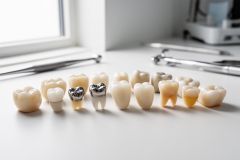
Explore the types of dental crowns available, including porcelain, metal, ceramic, and composite options, to make informed restorative choices.

Explore the dental crown and bridge procedure, including steps, benefits, and tips for patients considering restorative dental care abroad.
Dental crowns and bridges are fixed restorations used to restore damaged teeth, improve appearance, and replace missing teeth. A crown covers an individual tooth or implant, while a bridge uses artificial teeth to fill a gap.
Crowns may be recommended for teeth with large fillings, fractures, severe decay, extensive wear, discoloration, or previous root canal treatment. They may also be used to improve tooth shape or support a dental implant.
Traditional bridges are supported by crowns placed on neighboring teeth. Implant-supported bridges use dental implants and may avoid reducing healthy adjacent teeth.
Common materials include zirconia, porcelain, lithium disilicate, metal alloys, and porcelain fused to metal. Material selection depends on tooth position, bite pressure, aesthetic expectations, remaining tooth structure, and budget.
Treatment usually involves examination, X-rays, tooth preparation, digital scanning or impressions, a temporary restoration, and final placement. Some clinics use same-day computer-aided manufacturing, although not every case is suitable for immediate production.
The supporting teeth and gums must be healthy before permanent crowns or bridges are placed.