Quick Answer
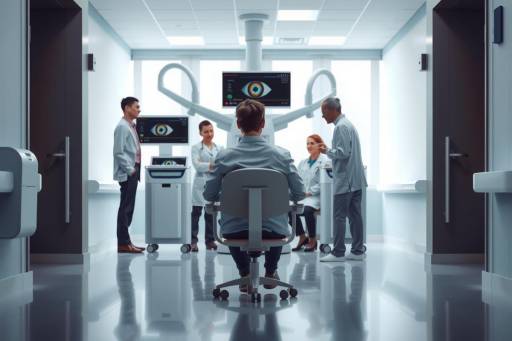
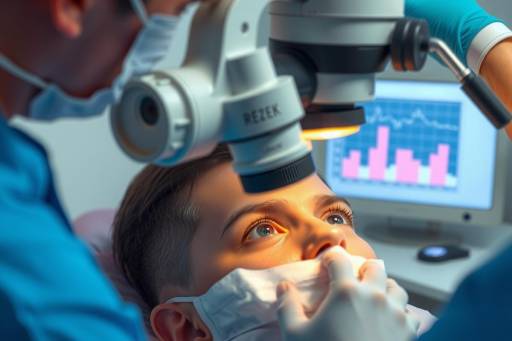
Eye-tracking systems in LASIK surgery use high-speed cameras and infrared sensors to monitor and follow eye movements in real time, allowing the laser to adjust its aim dynamically and maintain precise alignment with the cornea throughout the procedure.
- Eye-tracking technology continuously monitors involuntary eye movements such as microsaccades and blinks during LASIK surgery to ensure laser precision.
- The system uses infrared cameras and sensors to track multiple points on the eye, creating a real-time map of its position and orientation.
- Software algorithms process eye movement data within milliseconds to adjust the laser's aim dynamically and maintain accurate targeting.
- If the eye moves beyond the tracking range, the laser automatically pauses to prevent unintended tissue damage.
- Eye-tracking enhances safety by reducing the risk of laser misapplication and complications like decentered ablations or irregular astigmatism.
- Compared to traditional LASIK, eye-tracking systems improve accuracy, safety, and patient outcomes by compensating for eye movements during laser ablation.
- Future developments aim to integrate AI and advanced imaging to further improve tracking sensitivity and predictive adjustments during surgery.
How Do Eye-Tracking Systems Follow Eye Movement During LASIK Eye Surgery?
Eye-tracking systems play a crucial role in modern LASIK eye surgery by continuously monitoring and following your eye movements during the procedure. This advanced technology ensures that the laser remains precisely aligned with your cornea, enabling accurate reshaping of the corneal tissue and reducing the risk of complications that could arise from laser misapplication.
During LASIK, even the smallest involuntary eye movements, such as microsaccades, blinks, or slight shifts, can affect the laser’s focus and accuracy. Without compensation for these movements, the laser might ablate unintended areas of the cornea, potentially leading to irregular vision, glare, or the need for additional corrective procedures. Eye-tracking technology compensates for these movements in real time, allowing your surgeon to perform the procedure with enhanced precision and safety.
This advancement has significantly improved outcomes and patient satisfaction in laser eye surgery by enabling more consistent, predictable results. Patients benefit from sharper vision and a lower risk of side effects or complications.
Get expert support for your treatment
Let our coordination team prepare a personalized plan for you.
Contact information
Your information is only used to contact you and is never shared with third parties.
Your request has been received!
Your request has been received! Our coordination team will contact you as soon as possible.
If you are considering LASIK, understanding how eye-tracking systems work can help you appreciate the sophisticated technology that protects your vision throughout the surgery and supports optimal visual results. This article explains the mechanisms behind eye-tracking during LASIK, its benefits in improving safety and accuracy, and future developments that promise to make refractive surgery even safer and more effective.
The Role of Eye-Tracking Technology in Modern LASIK Procedures
Eye-tracking technology is integrated into most contemporary LASIK laser systems to enhance surgical precision and safety. Its primary function is to detect and follow your eye’s position and movements during the procedure, allowing the laser to adjust instantly and maintain accurate targeting throughout the treatment.
This technology works by using infrared cameras or sensors to monitor your pupil or corneal reflections, specific landmarks on the eye’s surface that remain relatively stable even during movement. The system tracks multiple points on the eye to create a dynamic, real-time map of its position and orientation. When your eye moves, even slightly, the laser system recalibrates its aim to align with the new position, preventing unintended laser application to adjacent tissues.
By continuously tracking eye movements, surgeons can perform more precise corneal reshaping, which directly improves visual outcomes and reduces the risk of complications such as decentered ablations or irregular astigmatism. This precision is especially important when using customized treatment profiles designed to correct individual refractive errors with high accuracy.
Eye-tracking technology also enhances patient safety by automatically pausing laser delivery if the eye moves beyond the system’s tracking capabilities, preventing accidental damage. This real-time adjustment capability allows surgeons to operate with greater confidence and helps ensure that the laser ablates exactly where planned, making LASIK procedures safer and more effective than ever before.
How Eye-Tracking Systems Detect and Follow Eye Movements During Surgery
During LASIK surgery, eye-tracking systems operate in real time to detect even the smallest involuntary movements of your eye, ensuring that the laser remains precisely aligned with the treatment area. These systems employ high-speed cameras combined with infrared light to capture detailed images of the eye’s surface, pupil position, and corneal reflections multiple times per second, often hundreds or thousands of times per second.
The captured images are processed instantly by sophisticated software algorithms that analyze the eye’s features and calculate its exact position and movement patterns. This processing occurs within milliseconds, allowing the system to detect horizontal, vertical, rotational, and even torsional movements of the eye. Such comprehensive tracking is crucial because the eye can move in complex ways during surgery, and the laser must compensate for all these directions to maintain accuracy.
Once the eye’s position is determined, the system communicates with the excimer laser to adjust its aim dynamically. This continuous feedback loop ensures the laser beam stays centered on the cornea and follows the eye’s movements seamlessly. If the eye moves beyond the system’s tracking range or too rapidly, the laser automatically pauses to prevent unintended tissue damage.
This advanced mechanism allows surgeons to perform highly precise corneal reshaping, reducing the risk of decentered ablations or irregular patterns that could impair vision. By maintaining laser focus despite involuntary eye movements, eye-tracking systems play a critical role in enhancing both the safety and effectiveness of LASIK procedures.
Advantages of Eye-Tracking in LASIK: Enhancing Safety and Precision
Eye-tracking technology significantly enhances the safety and precision of LASIK procedures by continuously monitoring and compensating for involuntary eye movements throughout the surgery. These subtle, often unconscious movements can otherwise cause the laser to stray from its intended target, potentially leading to complications or less effective visual correction. By precisely following the eye’s position in real time, eye-tracking minimizes the risk of laser misapplication, ensuring that the laser ablates the corneal tissue exactly where planned.
This technology also reduces the likelihood of irregular corneal reshaping, which can result in visual distortions, halos, glare, or decreased quality of vision after surgery. Such irregularities may cause patient dissatisfaction or the need for enhancement procedures. By maintaining consistent laser alignment, eye-tracking promotes smoother corneal surfaces and more predictable refractive outcomes.
In addition to improving surgical accuracy, eye-tracking systems contribute to faster procedures by reducing the need for pauses or repositioning due to eye movement. This efficiency can lessen patient discomfort and anxiety during surgery. Furthermore, these systems enhance safety by automatically halting laser delivery if the eye moves beyond the system's tracking range, thereby protecting the eye from unintended laser exposure. This automatic safety stop acts as a critical safeguard against potential errors, reassuring both patients and surgeons.
Overall, eye-tracking technology represents a vital advancement in LASIK surgery, improving both the precision and safety of the procedure while supporting better visual outcomes and higher patient satisfaction.
Comparing Eye-Tracking Systems with Traditional LASIK Techniques
Traditional LASIK techniques relied heavily on the patient’s ability to maintain steady fixation during the procedure, as real-time eye-tracking technology was not yet available. Surgeons depended on patients focusing on a fixed target to keep the eye still, but involuntary movements such as microsaccades or blinks could cause the laser to deviate from the intended treatment area. This lack of continuous tracking increased the risk of less precise laser application, which could result in suboptimal visual correction or complications.
The introduction of bladeless LASIK marked a significant improvement by using femtosecond lasers to create the corneal flap with greater precision and safety compared to mechanical microkeratomes. However, early bladeless systems still lacked advanced eye-tracking during the laser ablation phase, meaning that while flap creation was safer, the laser treatment itself was still vulnerable to eye movement errors.
Modern eye-tracking systems complement bladeless LASIK by continuously monitoring the eye’s position during the entire procedure, including stromal ablation. These systems use high-speed cameras and sensors to detect even the smallest eye movements and adjust the laser’s aim in real time, ensuring the treatment remains accurately centered and aligned with the corneal surface.
Compared to older methods, LASIK procedures equipped with eye-tracking technology provide improved accuracy, which may reduce the risk of complications such as decentered ablations or irregular astigmatism. This improvement can contribute to better visual outcomes and potentially fewer enhancement procedures. The integration of eye-tracking is considered an important advancement in patient safety and procedural consistency within refractive surgery techniques.
Future Developments in Eye-Tracking Technology for LASIK and Refractive Surgery
Future advancements in eye-tracking technology aim to push the boundaries of precision and customization in LASIK and other refractive surgeries even further. Researchers are developing faster and more sensitive tracking systems capable of detecting microsaccades, tiny, rapid eye movements, and other subtle motions with greater accuracy than current models. This increased sensitivity will allow for even finer adjustments during laser delivery, minimizing potential errors.
Integration with artificial intelligence (AI) and machine learning algorithms holds promise for predictive eye-tracking. Such systems could analyze patterns of eye movement in real time and anticipate where the eye is likely to move next, enabling the laser to adjust proactively rather than reactively. This anticipatory adjustment could improve treatment accuracy, especially in patients who have difficulty maintaining steady fixation.
Enhanced eye-tracking could also expand the range of patients eligible for laser vision correction by improving outcomes in complex cases. For example, individuals with nystagmus, a condition characterized by involuntary, rhythmic eye movements, or other challenging ocular motor disorders might benefit from more sophisticated tracking that compensates for their unique movement patterns.
Future systems may also combine eye-tracking with other advanced imaging modalities such as optical coherence tomography (OCT), providing real-time, three-dimensional corneal mapping during surgery. This integration would allow surgeons to monitor corneal thickness and shape changes dynamically, further refining laser application and enhancing safety.
Get expert support for your treatment
Let our coordination team prepare a personalized plan for you.
Contact information
Your information is only used to contact you and is never shared with third parties.
Your request has been received!
Your request has been received! Our coordination team will contact you as soon as possible.
These innovations are expected to continue improving patient safety, reducing procedure times, and optimizing visual results. As eye-tracking technology evolves, it will likely become an even more indispensable component of refractive surgery, offering personalized treatments tailored to each patient’s unique ocular dynamics.
Frequently Asked Questions
Q: Is eye-tracking technology safe during LASIK?
A: Yes, eye-tracking systems are designed to operate safely and are extensively tested to ensure they do not pose additional risks during LASIK. These systems enhance the surgeon's control and help prevent errors caused by involuntary eye movement.
Q: How does eye-tracking improve LASIK outcomes?
A: Eye-tracking maintains laser focus on the cornea by compensating for involuntary eye movements, leading to more precise correction and better visual results. This technology reduces the risk of irregular treatment and improves overall surgical accuracy.
Q: Can eye-tracking systems detect all types of eye movements?
A: Eye-tracking systems are highly sophisticated and can detect most involuntary eye movements, including horizontal, vertical, and rotational motions. While no system is perfect, current technology effectively keeps the laser aligned during the procedure.
Q: Are there any risks associated with eye-tracking technology in LASIK?
A: Risks are minimal; the technology is designed to enhance safety and precision. However, individual cases should be discussed with a qualified surgeon to address any specific concerns or conditions.
Q: Will I notice any difference in my LASIK procedure with eye-tracking?
A: Patients typically do not notice any difference during the procedure as eye-tracking technology operates seamlessly in the background. Its function is to improve surgical accuracy without affecting your experience during surgery.
The information provided is for educational purposes only and does not constitute medical advice. Always consult with a healthcare professional for medical guidance specific to your situation.